Calico Cat Genetics: X Chromosome & Color Inheritance
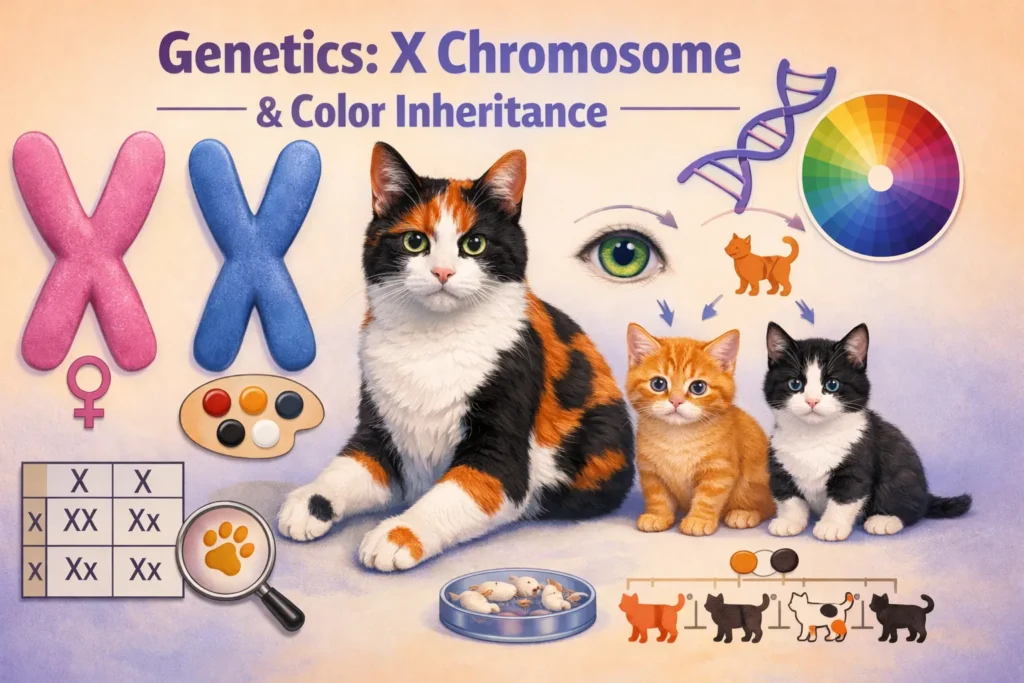
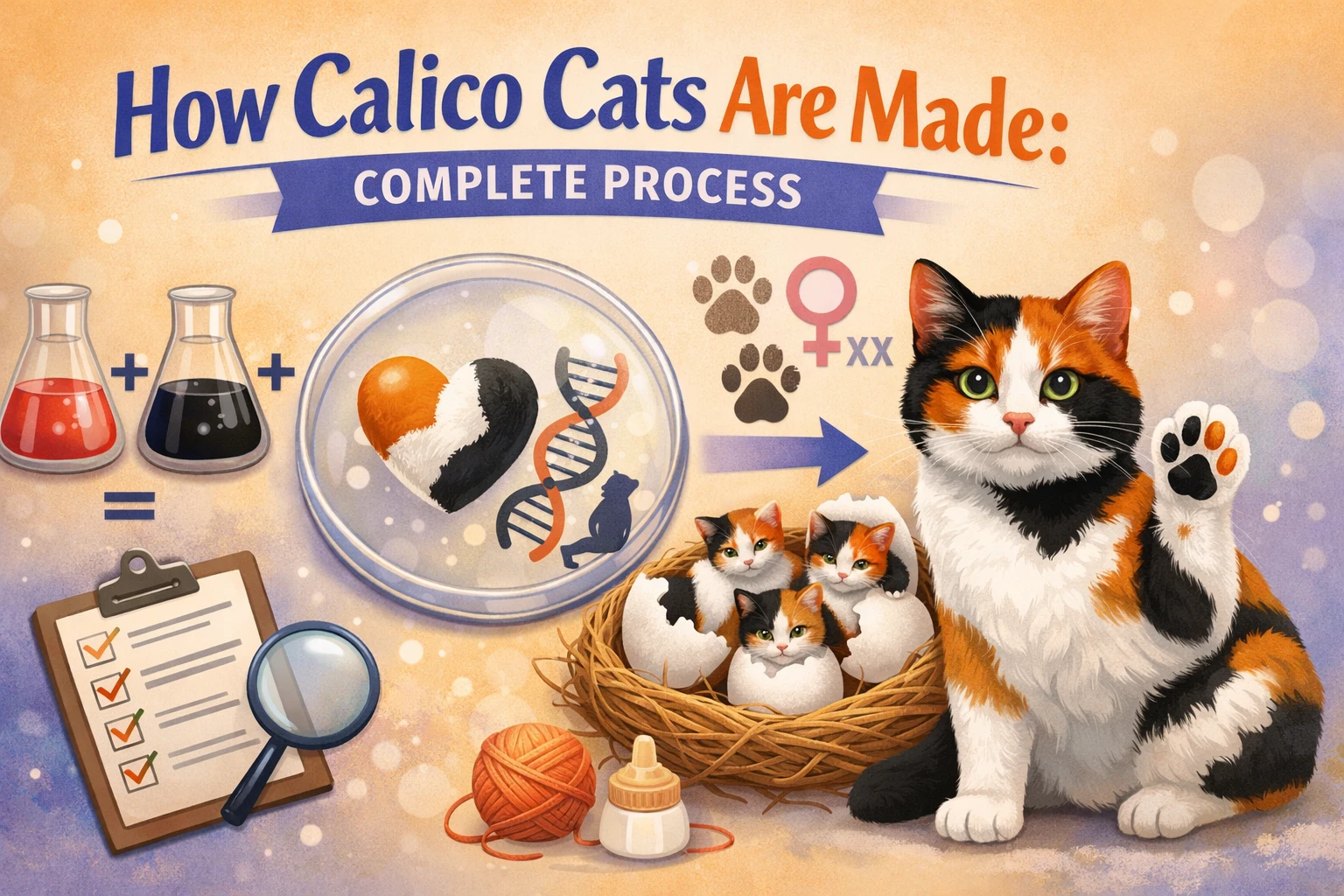
Calico cats are living demonstrations of genetic principles, showcasing X chromosome inactivation and color inheritance in a visually stunning way. Understanding calico cat genetics reveals fascinating biological processes that extend beyond felines to help explain human genetics, disease patterns, and developmental biology. This comprehensive guide breaks down the complex science of how calico cats are made, from X-linked genes to epigenetic processes.
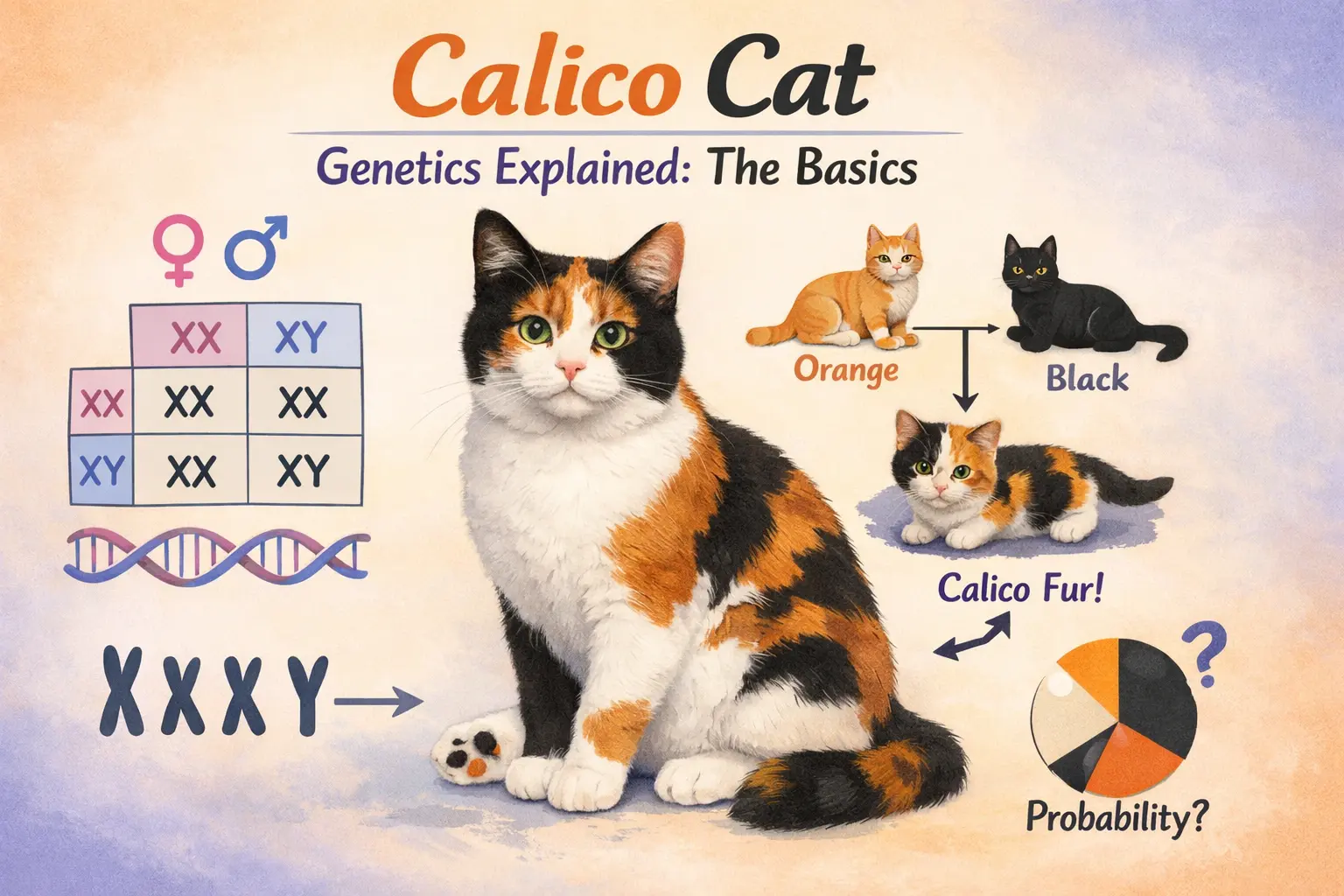
Calico Cat Genetics Explained: The Basics
Foundation Concepts:
Before diving into complex mechanisms, let’s establish fundamental genetics principles underlying calico coloration.
What Are Genes?
Basic Definition:
Genes: Units of hereditary information
Located on chromosomes (DNA structures)
Provide instructions for traits
Inherited from both parents
Control everything from eye color to fur patterns
In Cats:
Cats have 38 chromosomes (19 pairs)
36 autosomes (non-sex chromosomes)
2 sex chromosomes (XX or XY)
Thousands of genes across all chromosomes
Color genes specifically located on sex chromosomes
Chromosomes and Sex Determination
Sex Chromosomes:
Female Cats:
XX chromosomes
Two X chromosomes
One from mother, one from father
Can carry two different color genes
Essential for calico pattern
Male Cats:
XY chromosomes
One X from mother
Y from father
Typically only one color gene
Usually cannot be calico (exceptions exist)
Inheritance Pattern:
Mother (XX) gives one X to all offspring
Father (XY) gives either X (female offspring) or Y (male offspring)
50% probability of each sex
Determines which kittens can potentially be calico
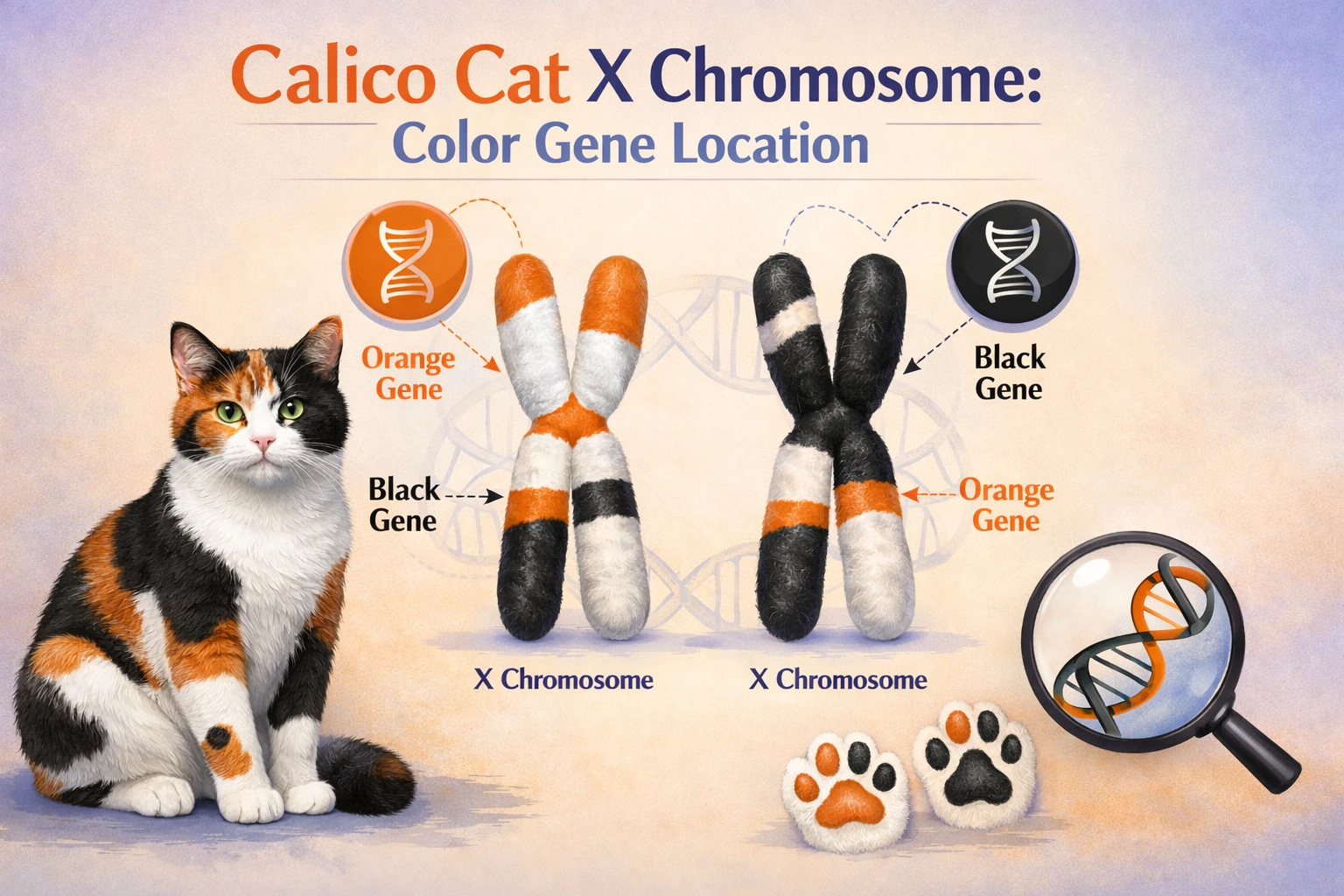
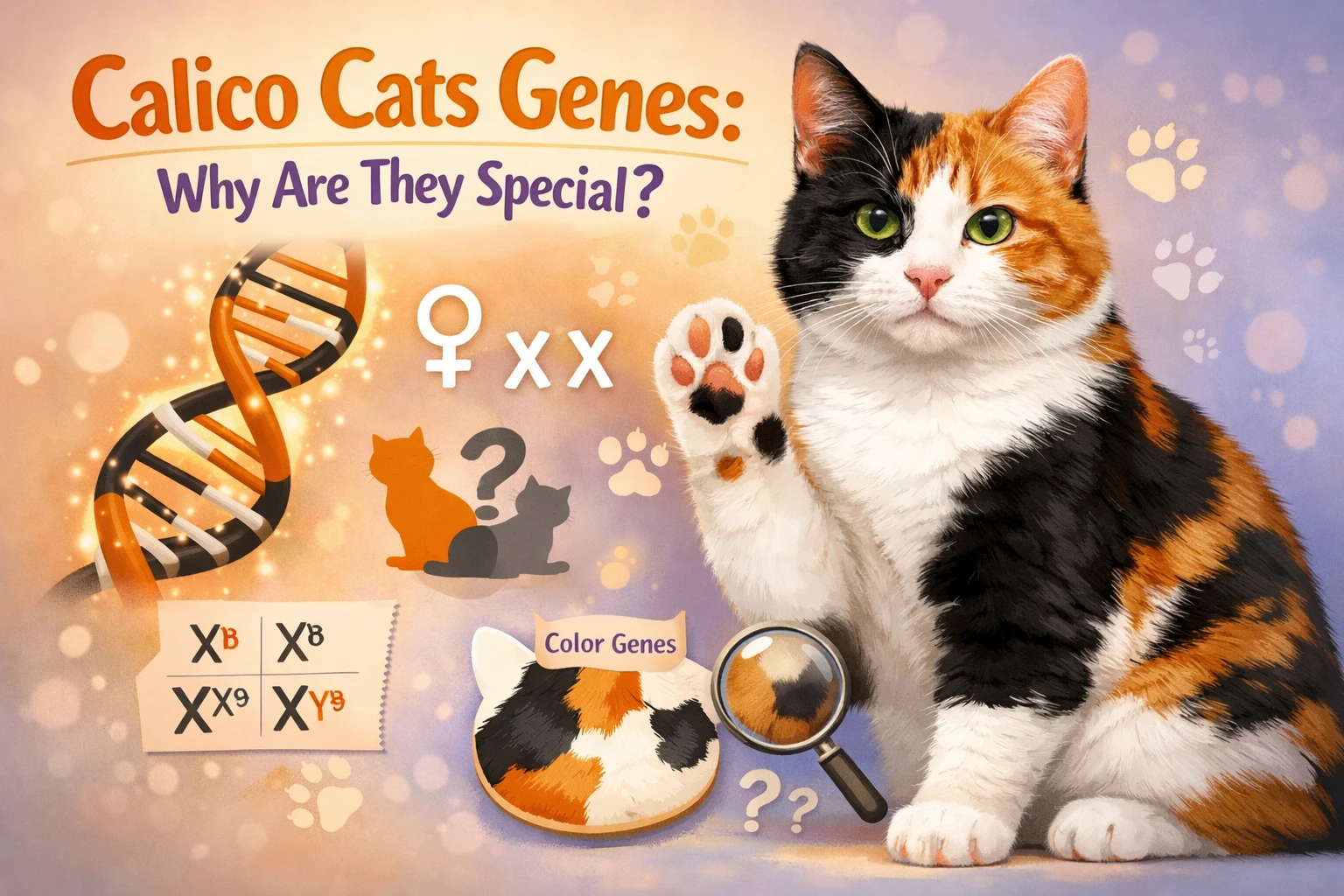
Calico Cat X Chromosome: Color Gene Location
The Critical Connection:
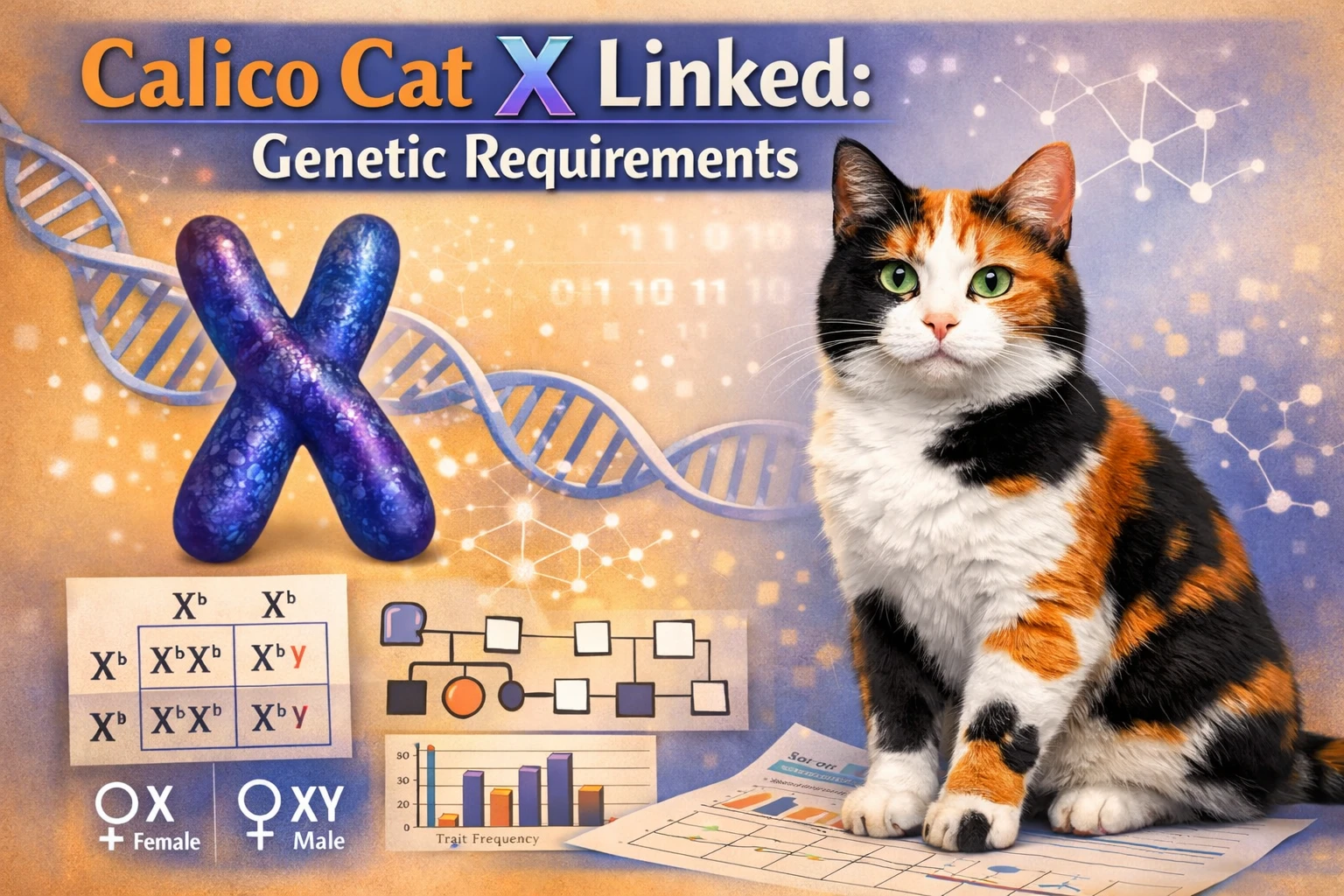
Calico Cat X Linked Genetics
Why X Chromosome Matters:
The genes controlling orange and black fur colors are exclusively located on the X chromosome. This X-linkage is the foundation of calico genetics.
The white in calico cats comes from a different gene unrelated to X chromosomes:
White Spotting Gene (S):
Located on autosome (not X chromosome)
Symbol: S (dominant)
Controls white areas
Independent of orange/black
Genotypes:
SS: Extensive white (van pattern, 80-90% white)
Ss: Moderate white (standard calico, 40-60% white)
ss: Minimal white (tortoiseshell, 0-25% white)
Inheritance:
Can be inherited from either parent
Dominant gene (one copy shows effect)
Determines white percentage
Creates “calico” vs “tortoiseshell” distinction
Complete Calico Formula:
XOXo (orange and black genes from X chromosomes)
S_ (at least one copy of white spotting gene)
Result: White, orange, and black patches
Step 3: Embryonic Development
How Calico Cats Are Born:
Timeline:
Days 0-7: Fertilization and Early Division
Egg fertilized with XOXo genotype
Cells divide but remain genetically identical
No color determination yet
All genes still active
Days 8-16: Blastocyst Stage
Embryo forms hollow ball of cells
X-inactivation begins
Random process in each cell
Foundation of pattern laid
Weeks 2-4: Organogenesis
Cells differentiate into tissues
Skin precursor cells form
Cells migrate to final positions
Patches expand through cell division
Weeks 4-8: Fetal Development
Fur develops
Pattern becomes visible
Colors emerge in patches
Final pattern determined
Birth (Week 9):
Kittens born with complete pattern
Colors may intensify with age
Pattern will not change
Each kitten unique
Step 4: Pattern Emergence
When Do Calico Cats Get Their Color?
Prenatal Development:
Color pattern determined before birth
X-inactivation occurs in womb
Pattern visible on skin before fur grows
Fur grows showing pattern
Birth:
Kittens born with visible calico pattern
Colors may be lighter than adult coat
Pattern recognizable immediately
No changes after birth to basic pattern
Maturation:
Colors may deepen over first months
White areas become clearer
Pattern becomes more distinct
Final coloration by 6-12 months
Pattern Stability:
Once established, pattern permanent
X-inactivation maintained throughout life
Same cells continue expressing same X
Pattern cannot change or shift
How Do Calico Cats Get Their Color: Pigment Production
Cellular Level:
Melanocytes and Pigment
Color-Producing Cells:
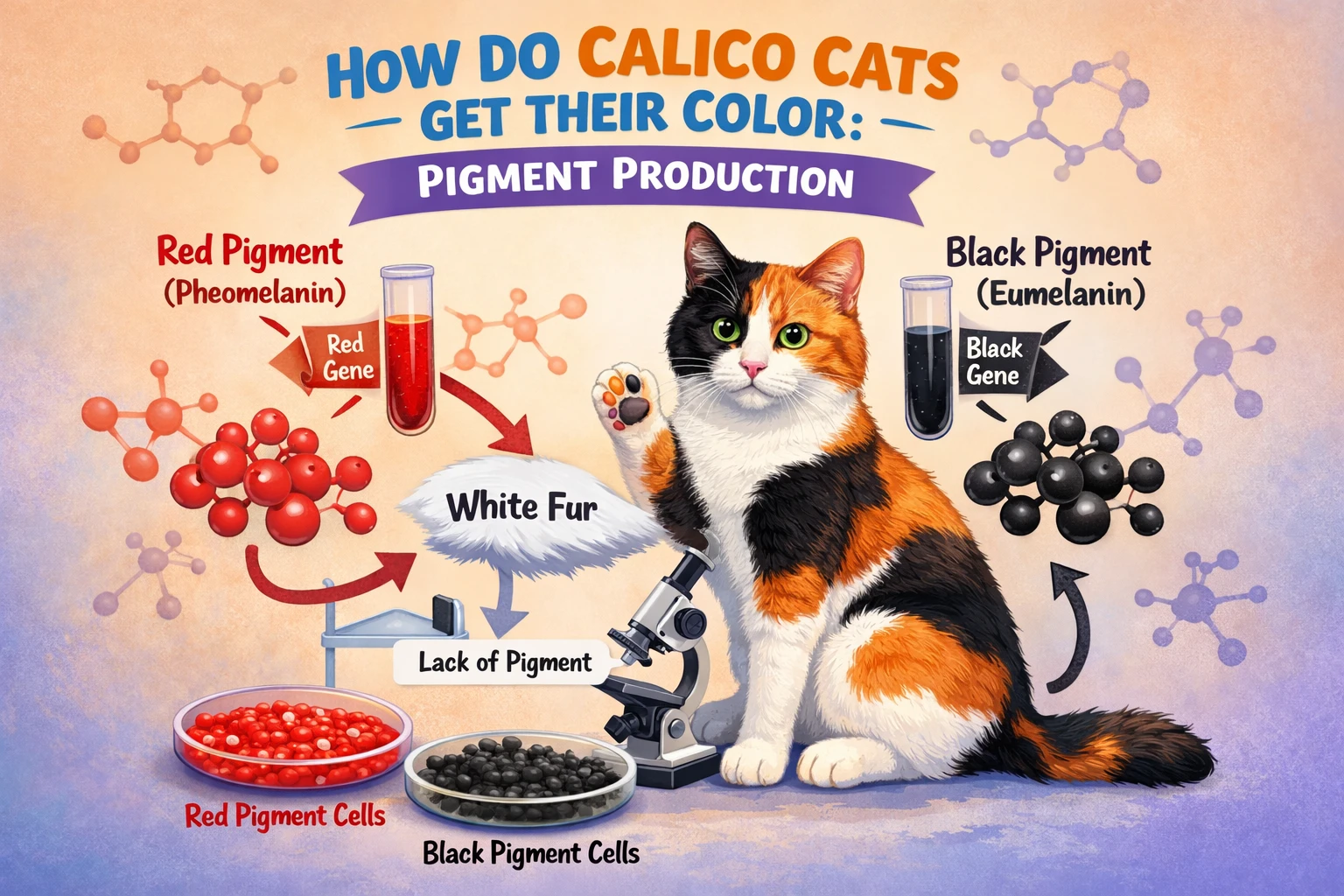
Melanocytes:
Specialized pigment-producing cells
Located in skin and hair follicles
Produce melanin (pigment)
Type of melanin depends on genes
Two Types of Melanin:
Eumelanin (Black/Brown):
Produced when o gene active (Xo expressed)
Creates black, brown, chocolate, or cinnamon colors
Default pigment type
Results in black patches in calicos
Phaeomelanin (Orange/Red):
Produced when O gene active (XO expressed)
Creates orange, red, or cream colors
Orange gene switches melanin type
Results in orange patches in calicos
White Areas:
No melanocytes present (white spotting gene effect)
S gene prevents melanocyte migration
Areas lack pigment entirely
Results in pure white fur
Calico Cat Color Genetics: Pigment Pathways
Biochemical Process:
Black Patch Formation:
Melanocyte has Xo active (XO inactive)
Normal melanin pathway functions
Eumelanin produced
Black pigment deposited in fur
Results in black patch
Orange Patch Formation:
Melanocyte has XO active (Xo inactive)
Orange gene modifies melanin pathway
Phaeomelanin produced instead
Orange pigment deposited in fur
Results in orange patch
White Patch Formation:
White spotting gene active
Melanocytes fail to migrate to area
No pigment cells present
No melanin produced
Results in white (unpigmented) fur
Calico Cat Genetics Mosaicism
Understanding Genetic Mosaics:
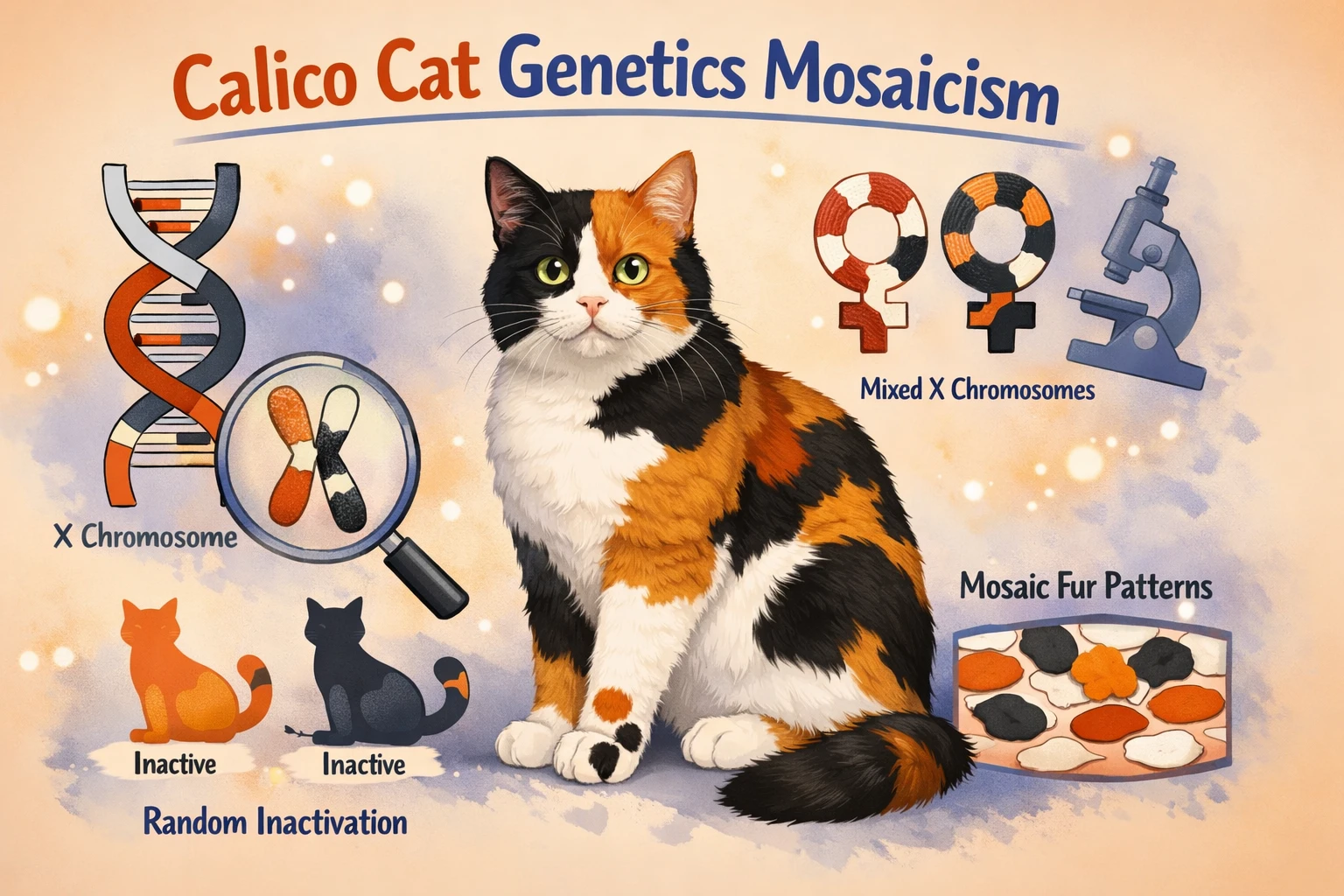
What Is Mosaicism?
Definition:
Organism with two or more genetically distinct cell populations
All derived from single fertilized egg
Difference in gene expression, not DNA sequence
Creates patchwork of different cell types
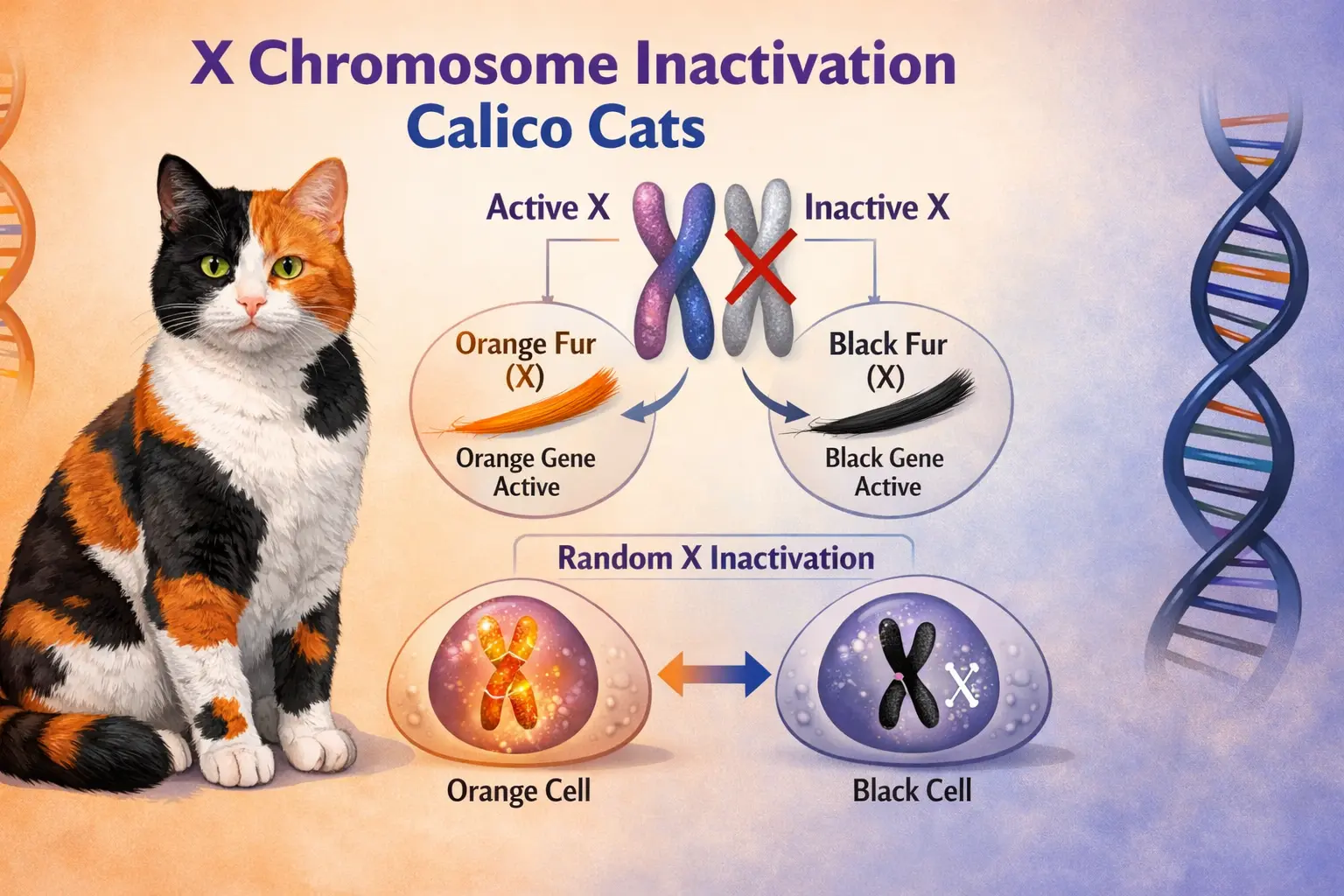
In Calico Cats:
Type of Mosaicism:
Functional mosaicism: Same DNA, different gene expression
Due to X-inactivation
Two cell populations:
Cells expressing XO (orange gene active)
Cells expressing Xo (black gene active)
Epigenetic rather than genetic mosaicism
Calico Cat Fur Is an Example Of:
X-inactivation
Epigenetic regulation
Functional mosaicism
Sex-linked inheritance
Dosage compensation
Used in Education:
Teaching genetics principles
Demonstrating inheritance patterns
Illustrating epigenetics
Showing chromosome inactivation
Visible genetics lesson
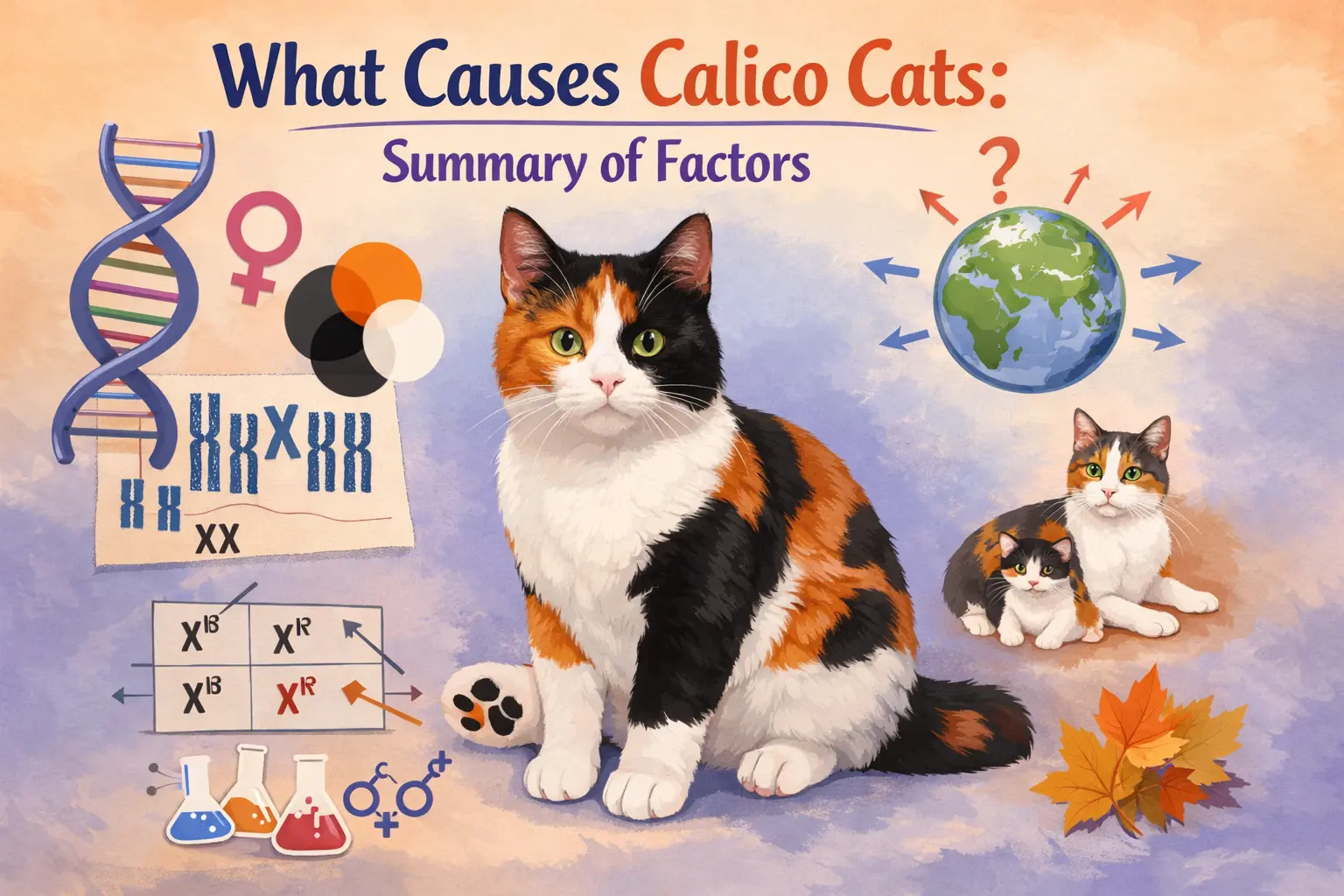
What Causes Calico Cats: Summary of Factors
Complete Requirements:
What Causes a Cat to Be Calico?
Genetic Factors:
X-linked color genes: Must have XOXo genotype
XX chromosomes: Almost always female (or XXY male)
White spotting gene: Must have S gene for white areas
X-inactivation: Random process creates patches
Developmental Factors:
Embryonic timing: X-inactivation during specific developmental window
Cell division: Patches grow as cells multiply
Cell migration: Movement of cells during development
Random chance: Unpredictable X-inactivation pattern
What Causes Calico Coloration in Cats?
Immediate Cause: X chromosome inactivation creating mosaic of orange and black expressing cells, combined with white spotting gene
Ultimate Cause: Inheritance of XOXo genotype plus white spotting gene from parents
Mechanism: Random epigenetic silencing of one X chromosome in each cell during early development
How Do Calico Cats Happen: Probability
Likelihood of Calico Offspring:
Breeding Probabilities
From Specific Crosses:
Orange Male × Black Female:
100% of female offspring will be calico/tortoiseshell (if white spotting gene present)
0% of male offspring will be calico
50% overall calico if 50% of litter is female
Black Male × Orange Female:
100% of female offspring will be calico/tortoiseshell (if white spotting gene present)
0% of male offspring will be calico
50% overall calico if 50% of litter is female
Calico Female × Orange Male:
50% of female offspring calico
0% of male offspring calico
25% overall calico
Calico Female × Black Male:
50% of female offspring calico
0% of male offspring calico
25% overall calico
White Spotting Factor: All above assume the white spotting gene (S) is present in at least one parent. Without it, offspring would be tortoiseshell (minimal white) rather than calico.
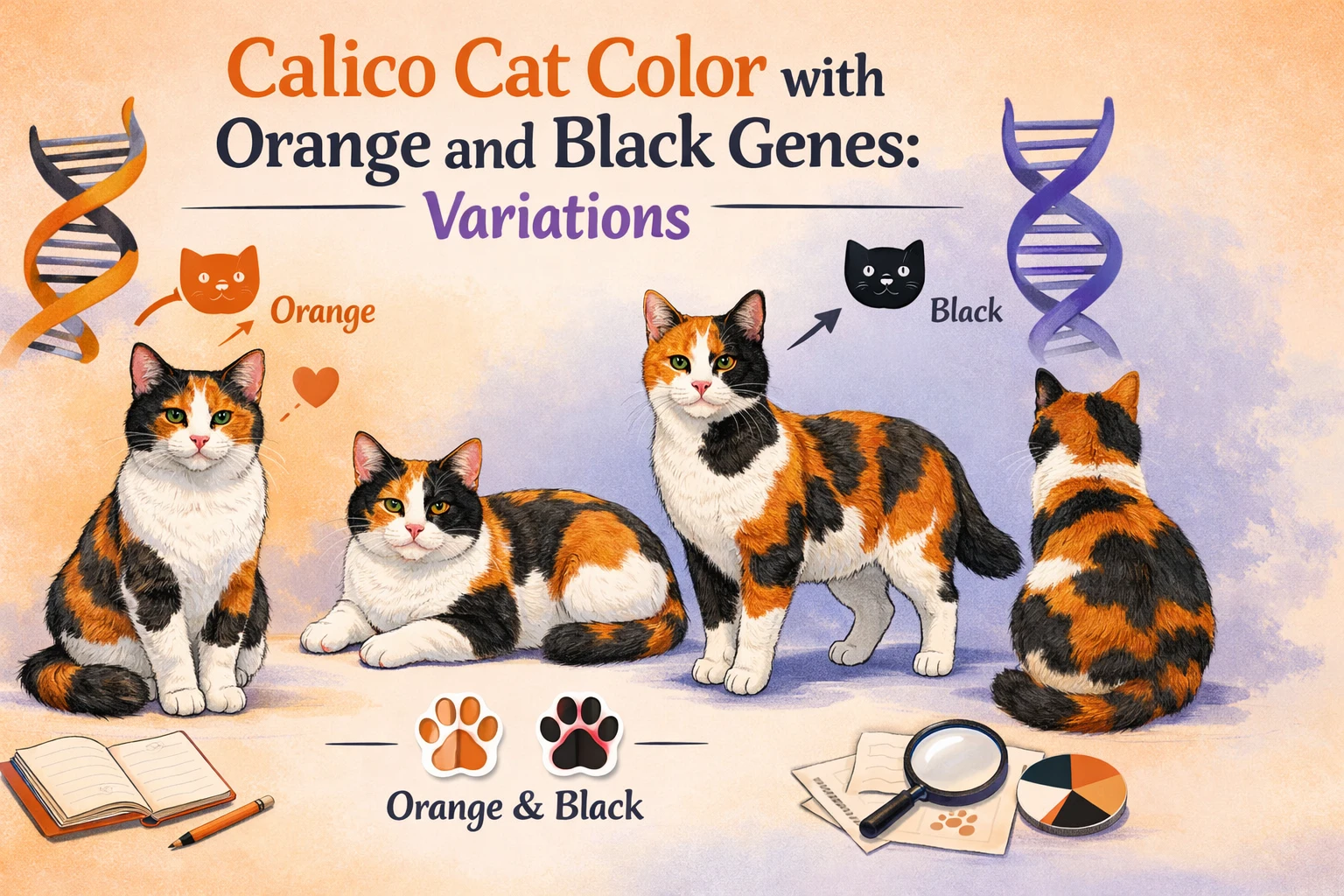
Calico Cat Color with Orange and Black Genes: Variations
Overall: 25% of all kittens will be calico (50% of females, which are 50% of total)
Note: Assumes white spotting gene present
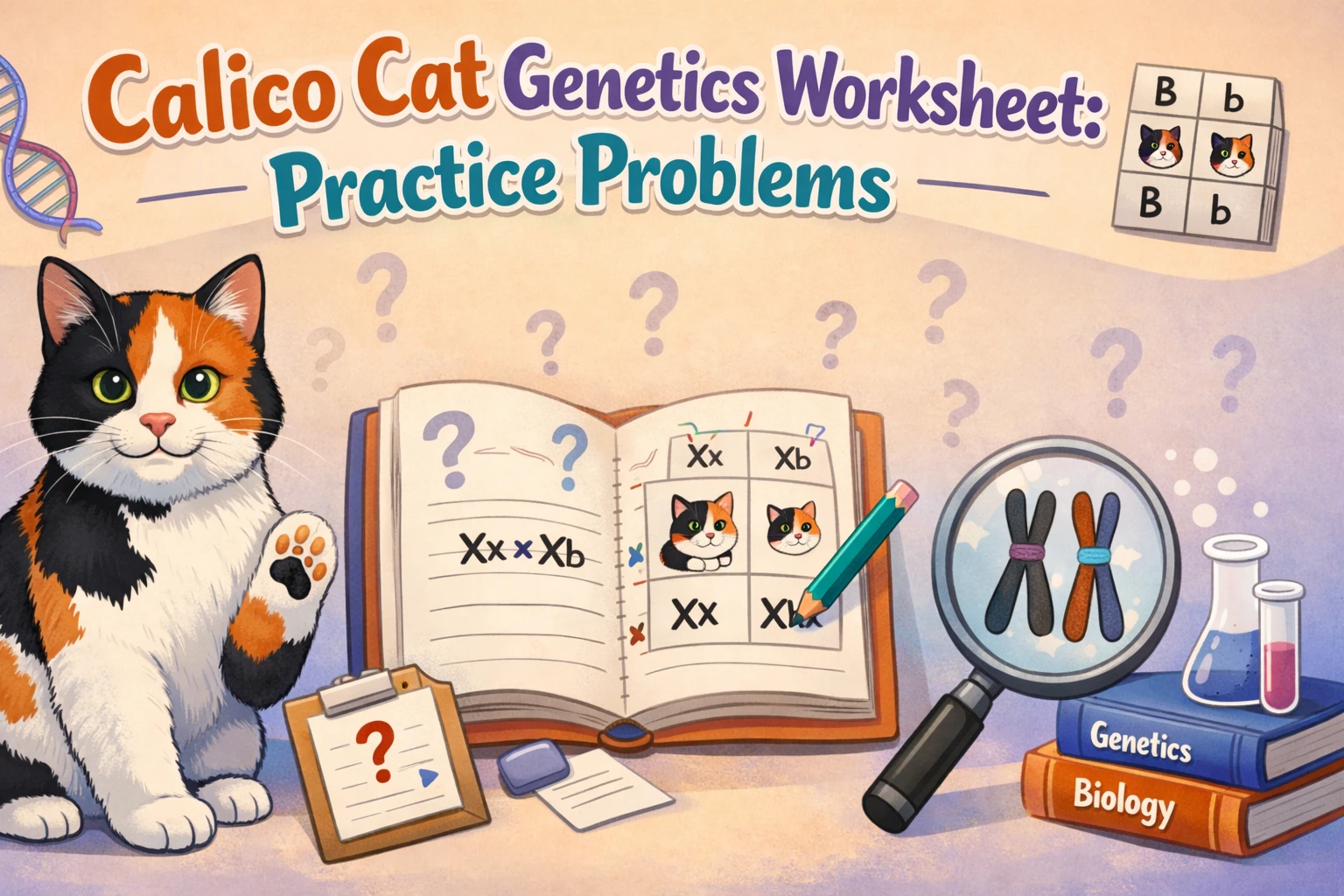
Problem 3: Male Calico
Question: How can a male calico cat exist? What is his genotype?
Answer:
Genotype: XOXOY (XXY)
Chromosomal abnormality: Klinefelter syndrome
Has two X chromosomes (carrying O and o) plus Y
Extremely rare: 1 in 3,000 calico cats
Almost always sterile due to the XXY condition
Problem 4: Pattern Formation
Question: Two calico sisters from the same litter have different patterns. Why?
Answer:
Both have same genotype (XOXo)
X-inactivation is random in each individual
Different cells inactivated different X chromosomes
Random process creates unique patterns
Even identical twins would differ
Problem 5: Color Prediction
Question: Can two black cats produce a calico kitten?
Answer:
No, not directly
Both parents would be XoXo or XoY
Cannot provide XO (orange) gene
Could only produce black offspring
Orange gene must come from at least one parent
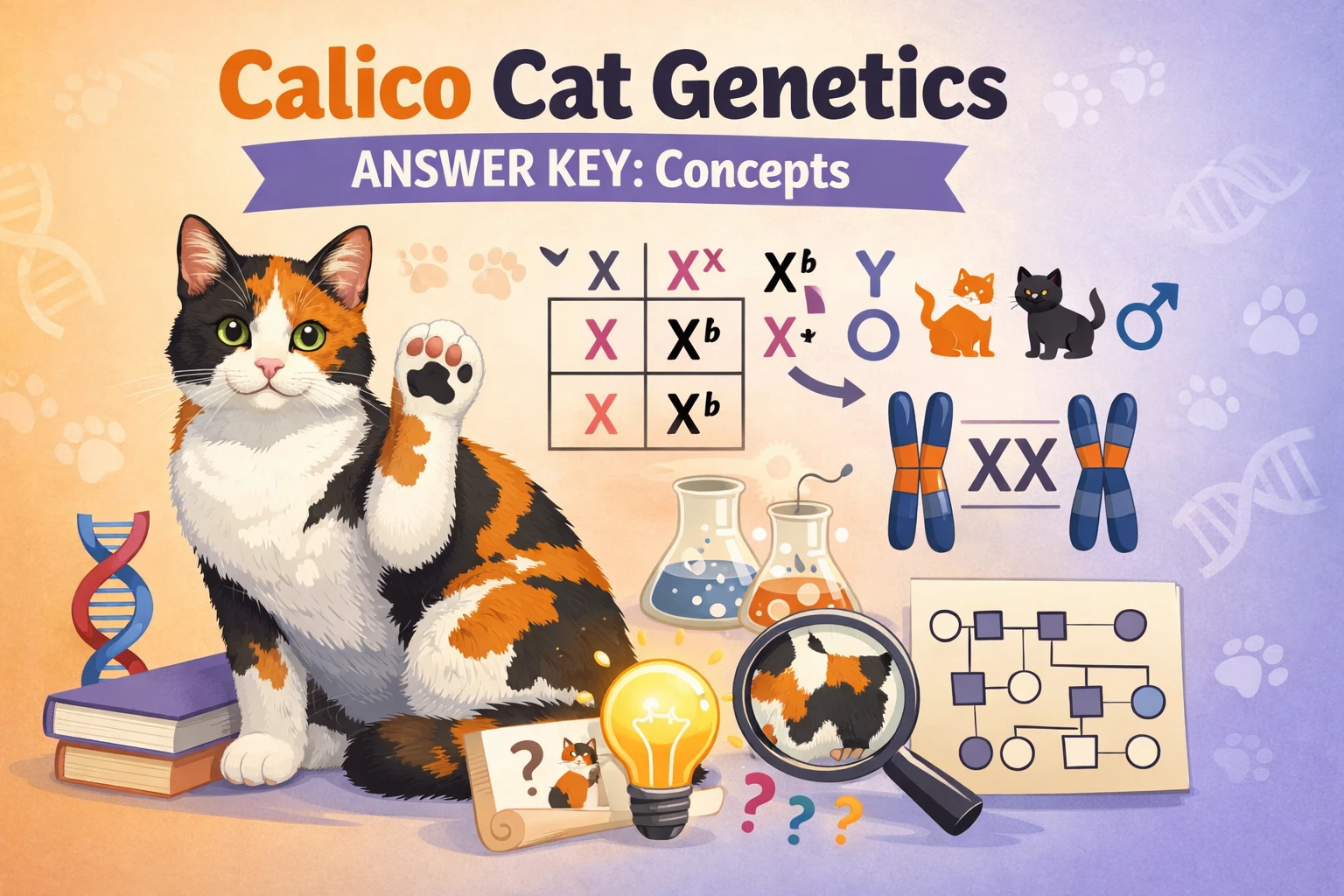
Calico Cat Genetics Answer Key: Concepts
Key Principles to Remember:
Color genes on X: Orange (O) and black (o) only on X chromosome
Two X needed: Calico requires XOXo genotype
Almost always female: XX chromosomes typical in females
X-inactivation creates pattern: Random process in each cell
White separate gene: White spotting (S) unrelated to X genes
Pattern unique: Random X-inactivation ensures no two identical
Cannot breed for pattern: Can breed for calico color, not specific pattern
Male calicos rare: Require XXY chromosomal abnormality
Conclusion
Understanding calico cat genetics reveals one of nature’s most elegant demonstrations of chromosomal biology, epigenetics, and developmental processes. From the X-linked inheritance of color genes to the random X chromosome inactivation that creates unique patterns, calico cats showcase complex genetic principles in visible, beautiful form. The science of how calico cats are made encompasses multiple genetic factors: the inheritance of both orange (XO) and black (Xo) genes requiring two X chromosomes, the separate white spotting gene creating the tri-color appearance, and the random X-inactivation process that ensures no two calicos ever look identical. This combination of X chromosome genetics, epigenetic regulation, and developmental biology makes calico cat genetics a perfect educational example. Whether you’re working through a calico cat genetics worksheet, trying to understand what causes calico coloration in cats, or simply appreciating the beauty of these felines, remember that each calico is a living mosaic—a visible demonstration of genetic mosaicism created through X chromosome inactivation. The calico cat color genetics represent not just feline inheritance, but fundamental biological principles that extend to understanding human genetics, sex-linked diseases, and epigenetic regulation. From how calico cats are born with predetermined patterns to why calico cats are different colors in intensity and distribution, the complete picture of calico cat gene expression involves multiple layers of genetic control, random developmental processes, and epigenetic modifications. This makes calico cats not just beautiful companions, but also scientifically special living examples of genetics in action.
Frequently Asked Questions
You can predict if kittens will be calico based on parent genetics (need XOXo genotype), but you cannot predict the specific pattern distribution, as X-inactivation is random. Each calico’s unique pattern forms by chance during development.
Calico cats visibly demonstrate X-linked inheritance, X-inactivation, epigenetic regulation, and mosaicism. They serve as living examples of complex genetic principles, making them valuable educational tools and scientifically significant.
X-inactivation (lyonization) is the random process where one X chromosome is silenced in each cell of female mammals. In calico cats, some cells silence the X with the orange gene (producing black patches) while others silence the X with the black gene (producing orange patches).