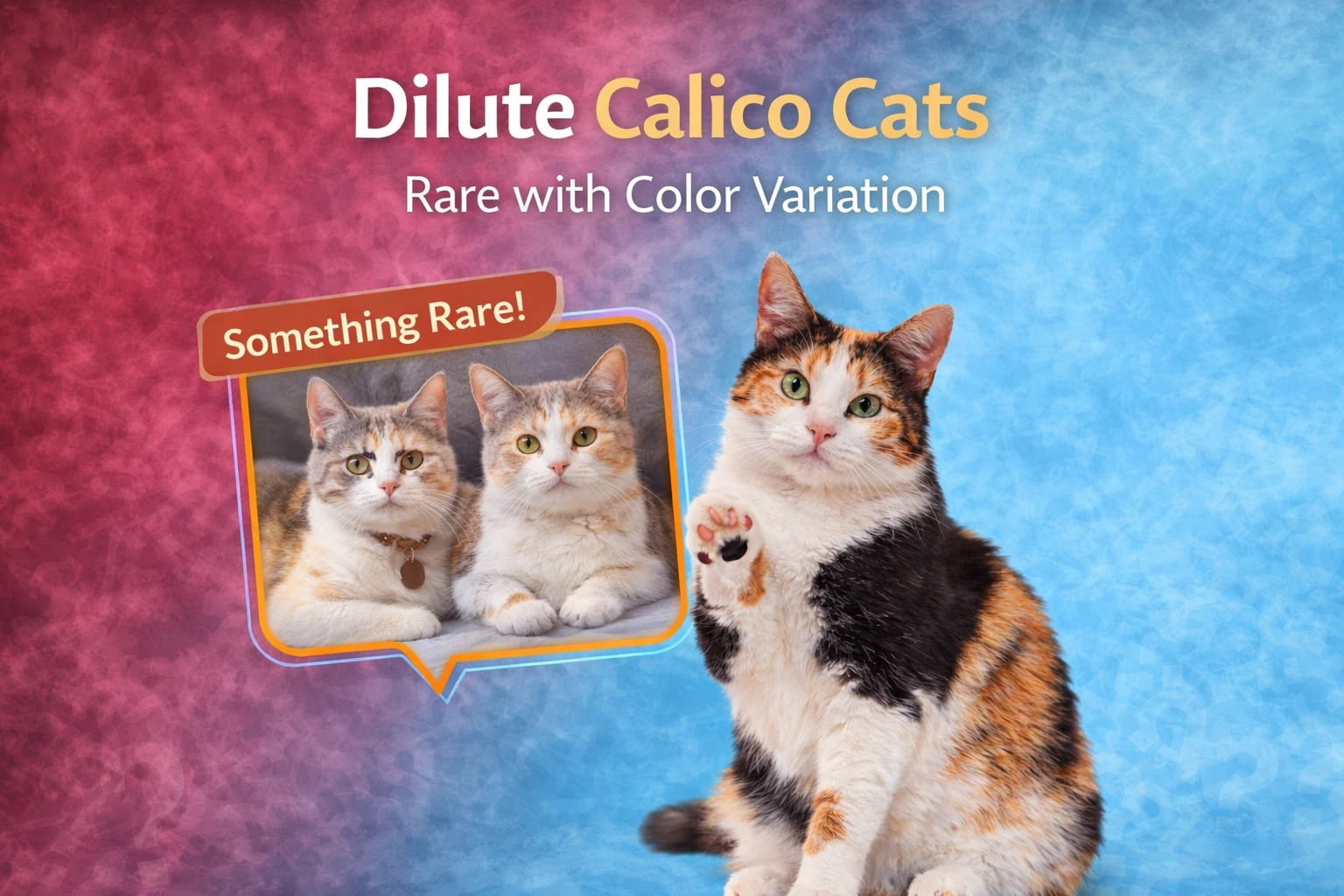
Why Are Calico Cats Always Female? Complete Genetics Explanation
One of the most fascinating facts about calico cats is their connection to gender. If you’ve ever wondered “are calico cats always female?” or “why are calico cats female?”, you’re asking about one of nature’s most interesting genetic phenomena. This comprehensive guide explains the science behind why calico cats are mostly female, explores the rare exceptions, and reveals how chromosome biology creates these stunning tri-colored felines.
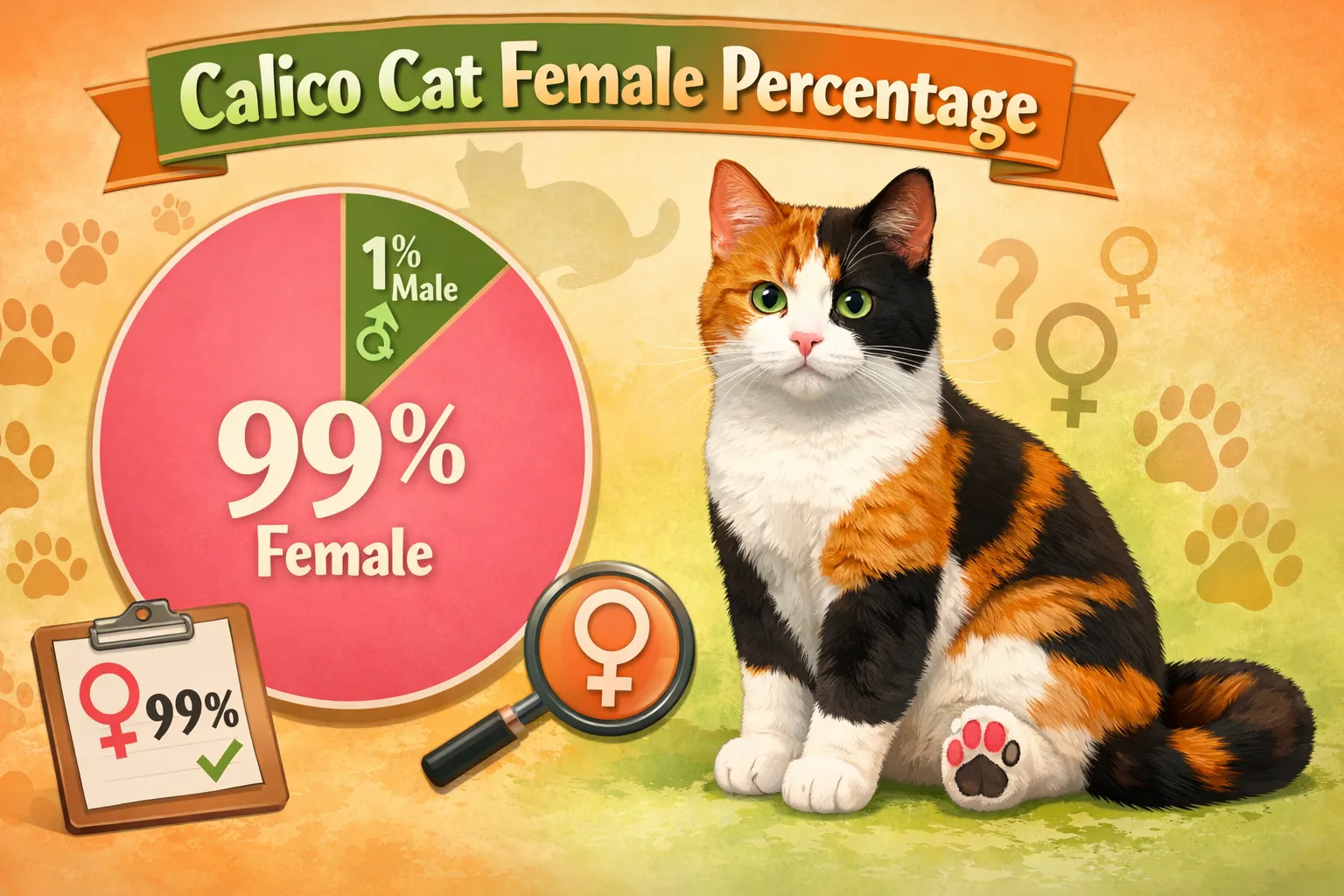
Calico Cat Female Percentage
Statistical Breakdown:
What Percentage of Calico Cats Are Female? When people ask “what percent of calico cats are female?”, the scientific answer is approximately 99.97%. This extraordinary gender imbalance isn’t random—it’s the direct result of how calico coloring is genetically determined.
Why Are Calico Cats Always Female?
If you encountered 3,000 random calico cats, you’d expect to find:
This makes the statement “calico cats are always female” practically accurate for everyday purposes, even though technically a tiny percentage of exceptions exist.
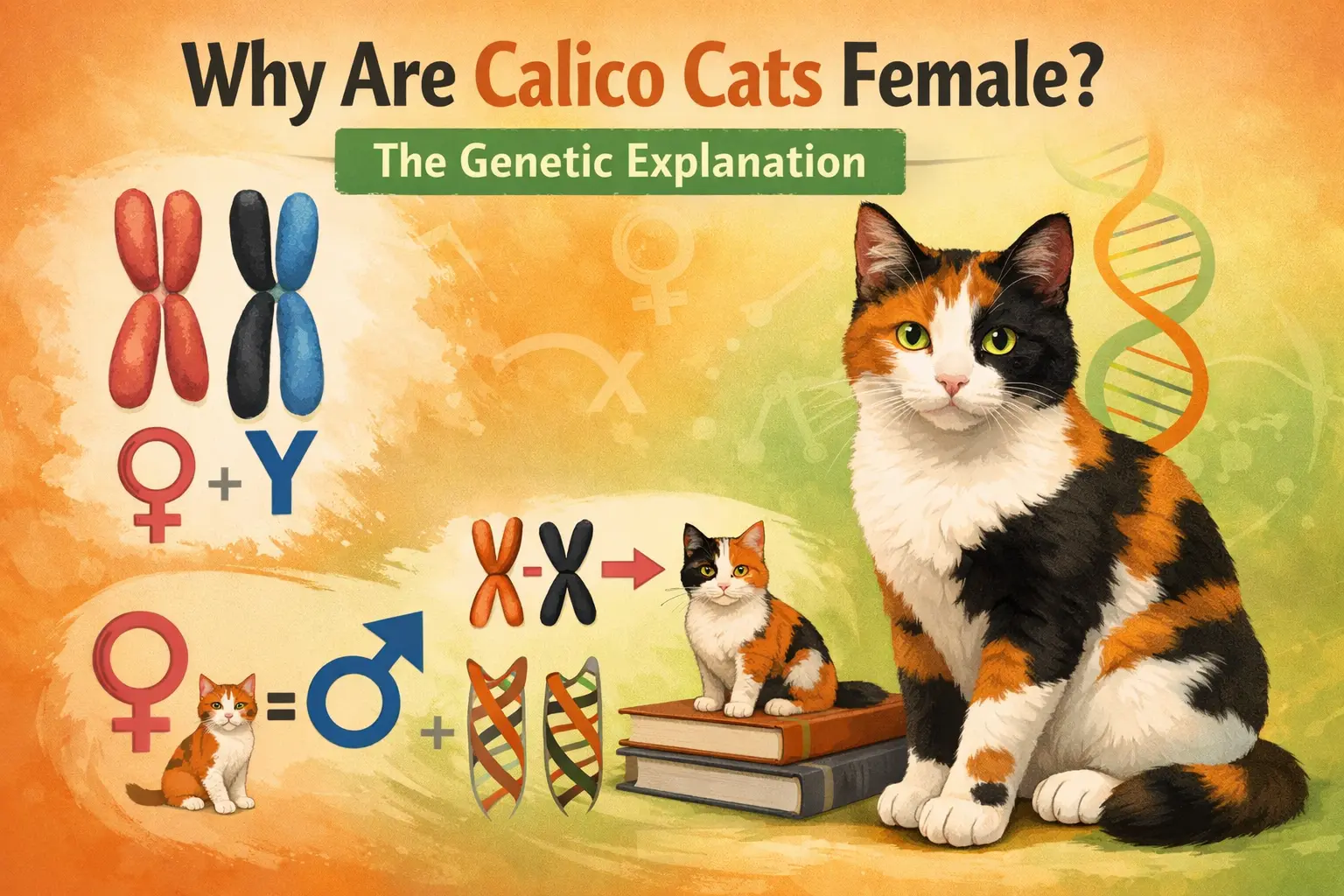
Why Are Calico Cats Female? The Genetic Explanation
It’s a fact that almost all calico cats are female because of the unique chromosomal makeup that determines the color variations in their coats.
The sex chromosomes (X and Y) determine whether a cat will be male or female. Each cat has a pair of sex chromosomes with the possible combinations of XX (female) and XY (male). The X chromosome also carries the coding gene for the black and orange colors in a calico cat’s coat.
Female calico cats have two X chromosomes and therefore have two chromosomes with color code. Only if the cat gets one orange-coded X and one black-coded X, will she be calico, expressing both black and orange coloration.
For example, a cat receives an X chromosome from her mother that codes for black fur and an X chromosome from her father that codes for orange fur. While it only takes one X chromosome to make the fur a certain color, females are special with two X chromosomes. During development, one X chromosome can override the other, allowing either black or orange to be the dominant color in an area. This particular color development occurs in each individual cell, shutting down one X chromosome while allowing the other to be active. With varying dominant X chromosomes, a cat’s colors will also vary, which gives calico cats the orange and black colors.
But, where do the white patches come from? To make things even more complicated, calico cats must also inherit a gene unrelated to the X and Y chromosomes that codes for white fur.
Because male cats have one X chromosome with code for black or orange and one Y chromosome with no color genes, they cannot technically be calico. They’ll only express either black or orange, but not both.
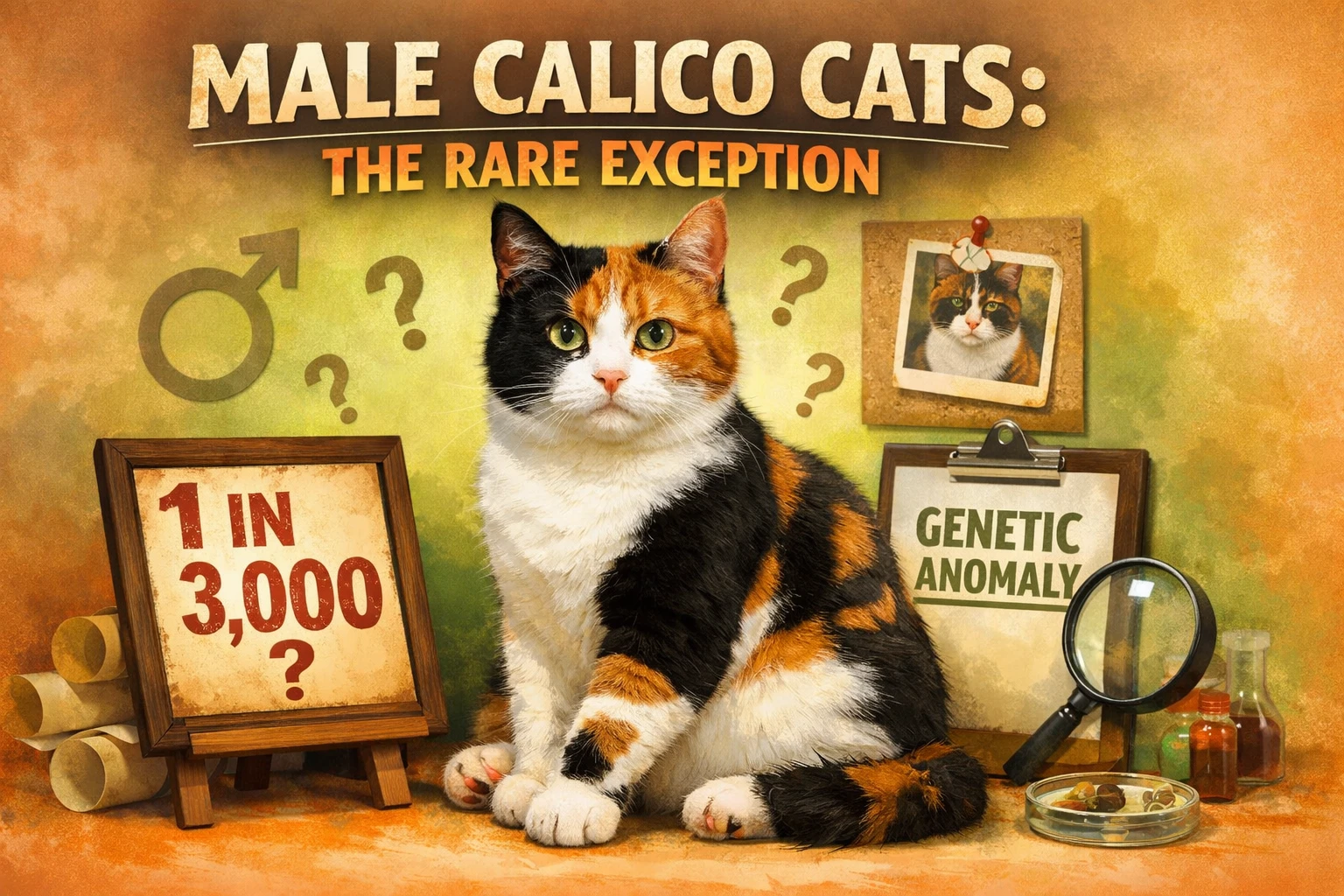
Male Calico Cats: The Rare Exception
There are a few exceptions to the female-only calico rule: a genetic anomaly known as Klinefelter’s syndrome and chimerism. Klinefelter’s syndrome occurs when a male inherits an extra X chromosome from his father or mother, making his genetic makeup XXY. Chimerism occurs when a pair of embryos fuses very early in development, resulting in two different sets of DNA.
Both of these mutations are rare. These unicorn cats are almost always sterile, so they cannot be used to breed more calico specimens.
Unfortunately, because male calico cats are born with a genetic anomaly, they are often much less healthy than their female counterparts. Male calicos can live long and healthy lives, but these special cats require dedicated caretakers.
If you want to welcome a calico kitty into your life, chances are she’ll be a female. But, you might get lucky and find a unicorn cat – a male calico. No matter what color your friend is, you’re sure to enjoy your cat’s new company.
Cultural Myths vs Genetic Reality
Throughout history, calico cats have been surrounded by myths, including beliefs that they bring good luck or possess special powers. While these cultural stories add charm, the true reason behind their rarity lies entirely in genetics. Science provides a clear and verifiable explanation without the need for superstition.
Are Calico Kittens All Female?
Calico kittens are almost always female because the genes for black and orange colors are on the X chromosome. Female kittens have two X chromosomes, which lets them show both colors. Male kittens usually have only one X chromosome, so they can show only one color. Male calico kittens are very rare and happen only because of unusual genetic conditions.
Calico Cats Always Female Personality: Does Gender Affect Behavior?
Calico cats are usually female, but *their gender does not control their personality. The calico pattern is just a coat color, not a behavior trait. People often talk about “calico attitude,” but there is *no scientific proof that calico cats behave differently because of their color. Personality depends more on upbringing, environment, hormones, and individual nature than on being a female or a calico.
Scientific Importance of Calico Cats
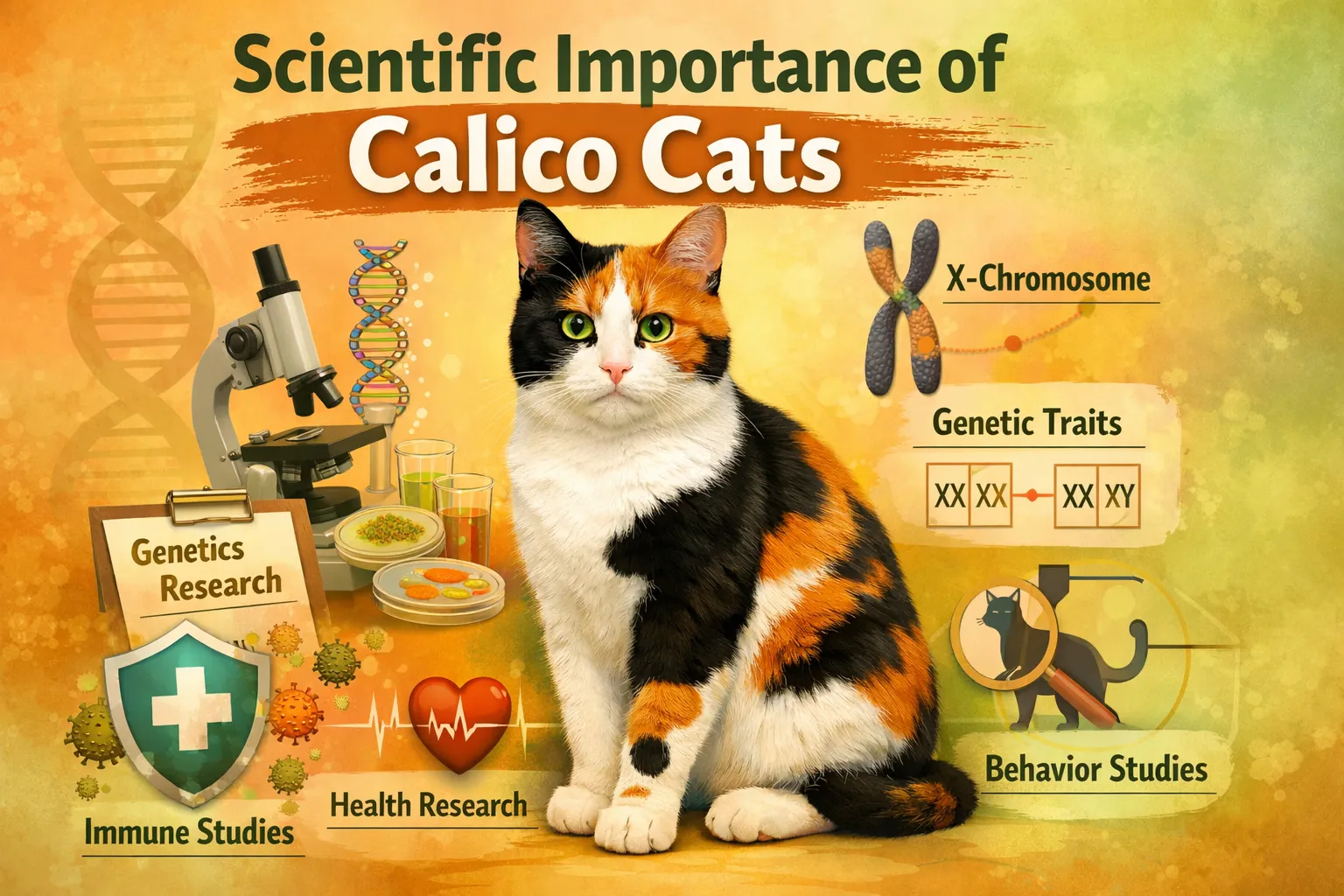
Calico cats are scientifically important because they provide a clear, real-life example of genetic principles. Their coat pattern helps scientists study X-linked inheritance, since the genes for black and orange fur are located on the X chromosome. Calico cats also demonstrate X-chromosome inactivation, a process where one X chromosome is randomly switched off in female cells, creating the patchy color pattern.
Because of this, calico cats are widely used in genetics education and research to explain how chromosomes, genes, and inheritance work. They also help scientists understand rare chromosomal conditions, such as XXY males, making calico cats an important natural model in biology and veterinary science.
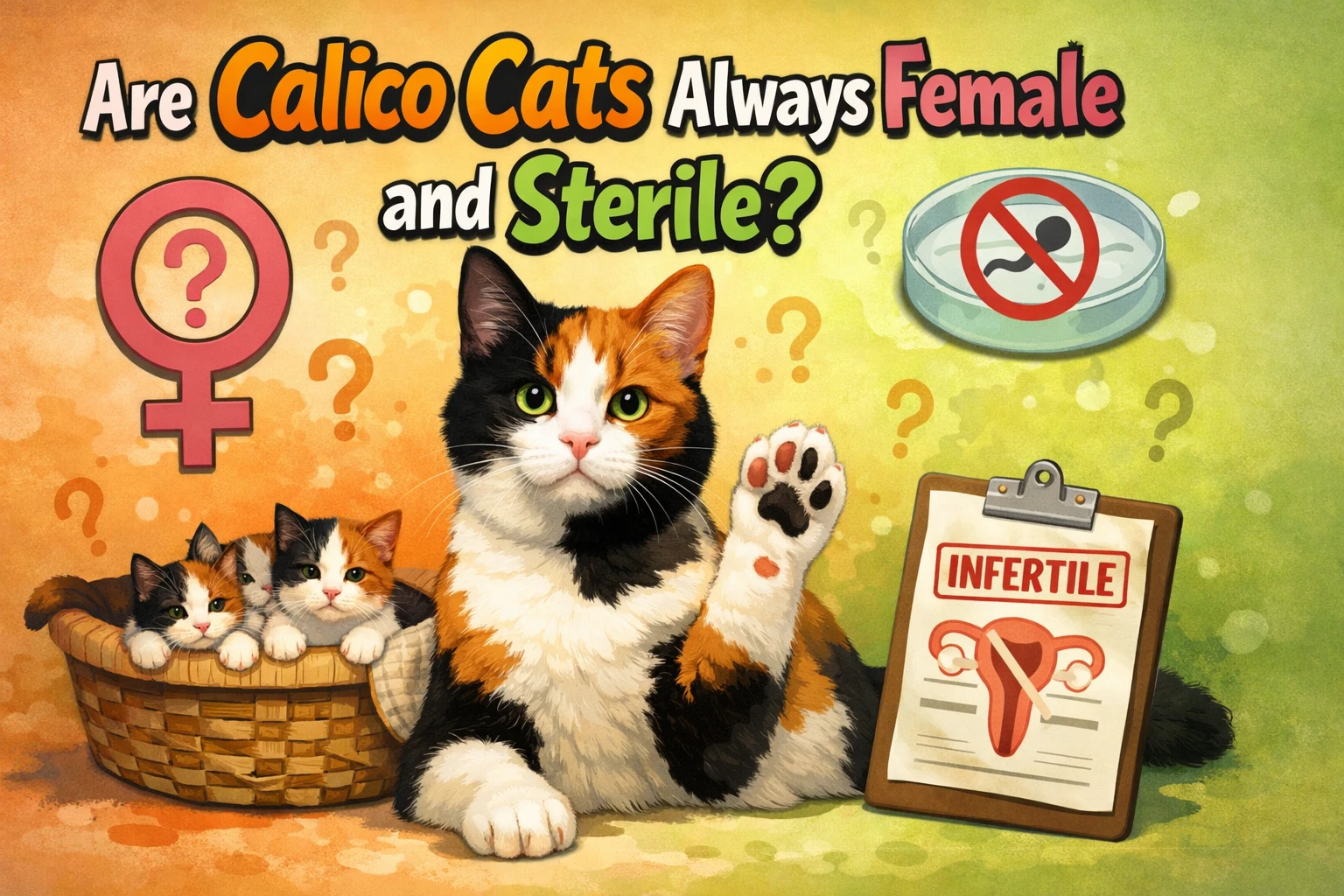
Are Calico Cats Always Female and Sterile?
No. Calico cats are almost always female and are not sterile.
Female calico cats are normal and fertile. Only the very rare male calico cats are usually sterile because of genetic abnormalities.
Correct Statement: “Female calico cats are fertile; male calico cats are almost always sterile due to their XXY chromosomal condition.”

Why the Female Dominance Is So Strong
The overwhelming majority of calico cats are female because the genetic conditions required for the pattern naturally align with the XX chromosome configuration. Male calicos require rare chromosomal abnormalities, making them statistical exceptions rather than the rule.
Conclusion
The question “are calico cats always female?” has a nuanced answer: while not absolutely 100% of the time, calico cats are indeed almost exclusively female at approximately 99.97%. Understanding why calico cats are female requires knowledge of X-linked inheritance, chromosome biology, and the fascinating process of X-inactivation that creates these distinctive patterns.
The reality that calico cats are usually female—and why calico cats are mostly female—stems from the fundamental genetic requirement for two X chromosomes to produce both orange and black coloring. Since most calico cats are female with normal XX chromosomes, they can reproduce normally and live healthy lives. The rare male exceptions, while genetically fascinating, typically face health challenges due to their XXY chromosomal makeup.
Whether you’re wondering “is calico cats always female,” trying to understand “why calico cats are almost always female,” or simply curious about “what percentage of calico cats are female,” remember that this gender connection isn’t arbitrary—it’s a direct result of how color genes are carried on sex chromosomes. The calico pattern serves as one of nature’s most visible demonstrations of genetic principles, making every calico cat a living lesson in inheritance, chromosome function, and the beautiful complexity of biological systems.
So yes, when someone asks “are all calico cats female?”, you can confidently answer that they’re correct for all practical purposes—99.97% of calicos are female, and the rare males exist only through chromosomal abnormalities. This makes the statement “calico cats always female” essentially true, even if technically leaving room for that fascinating 1-in-3,000 exception that proves the rule.