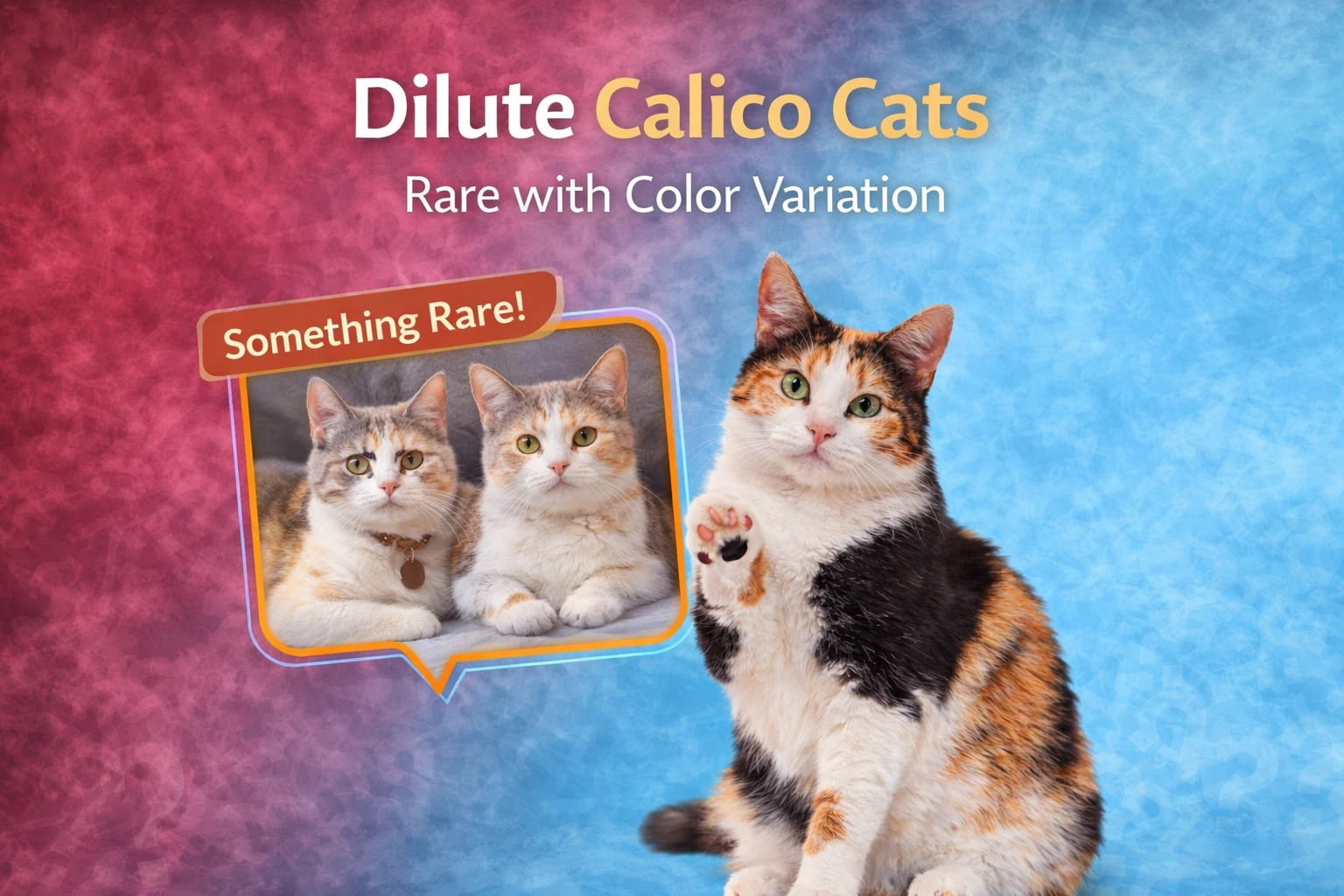
Vocal Understanding Their Meowing & Communication Habits
Calico cats have a reputation for being chatty, opinionated, and vocal about their needs and feelings. If you share your home with a calico, you’ve probably noticed she has plenty to say throughout the day. But are calico cats vocal compared to other cats? Do they really meow more, or is this just another stereotype? This complete guide explores calico cat communication, why they might be so talkative, and what all that meowing really means.
Are Calico Cats Vocal?
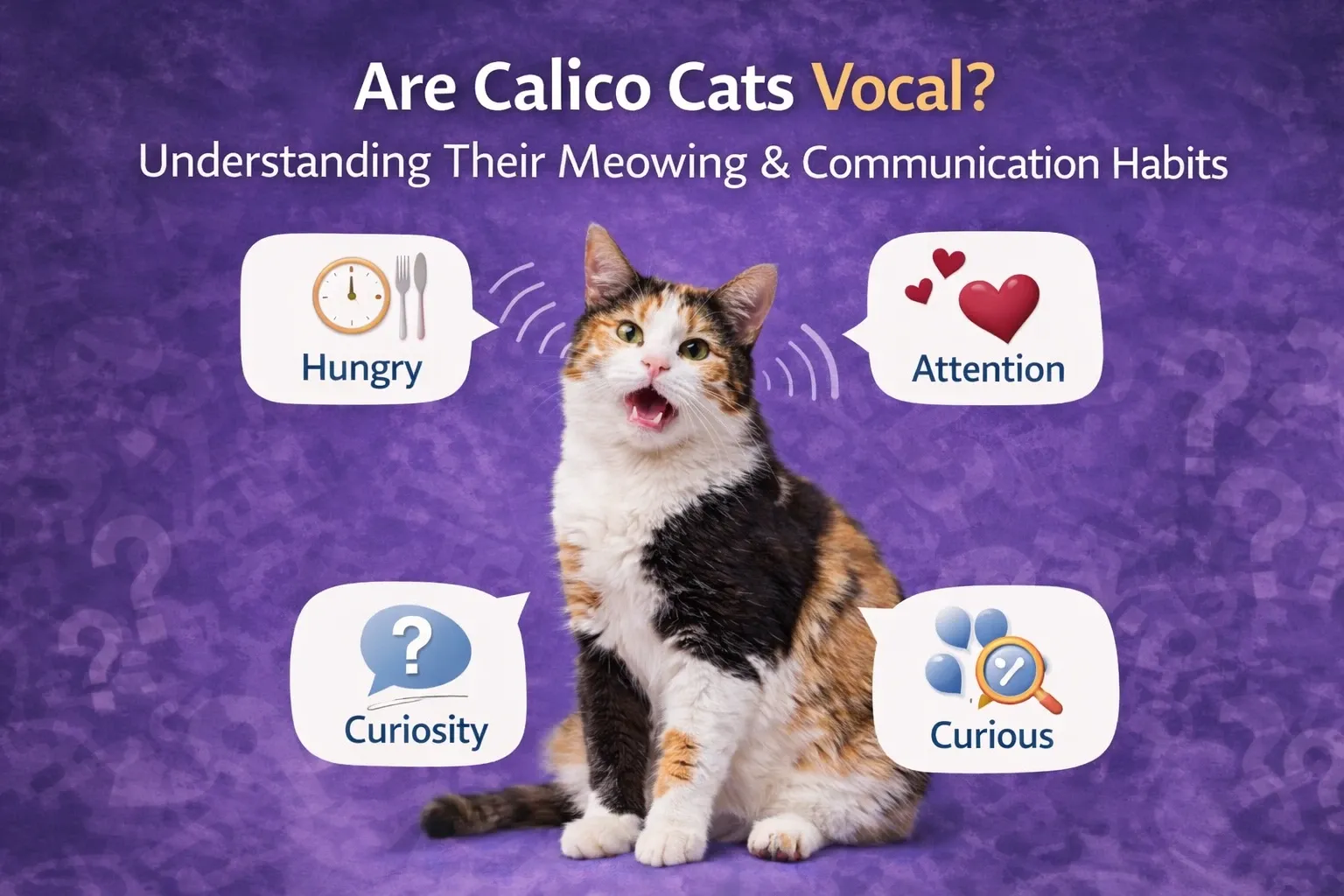
Yes, Many Calico Cats Are Quite Vocal
Calico cats are often more vocal than average, likely due to their predominantly female genetics. While many calico owners report their cats as talkative, expressing opinions on meals and activities, individual variation exists. Some calicos are quiet, with factors like personality, breed background, and early socialization influencing their vocal behavior. Despite the stereotype, not all calicos are extremely vocal.
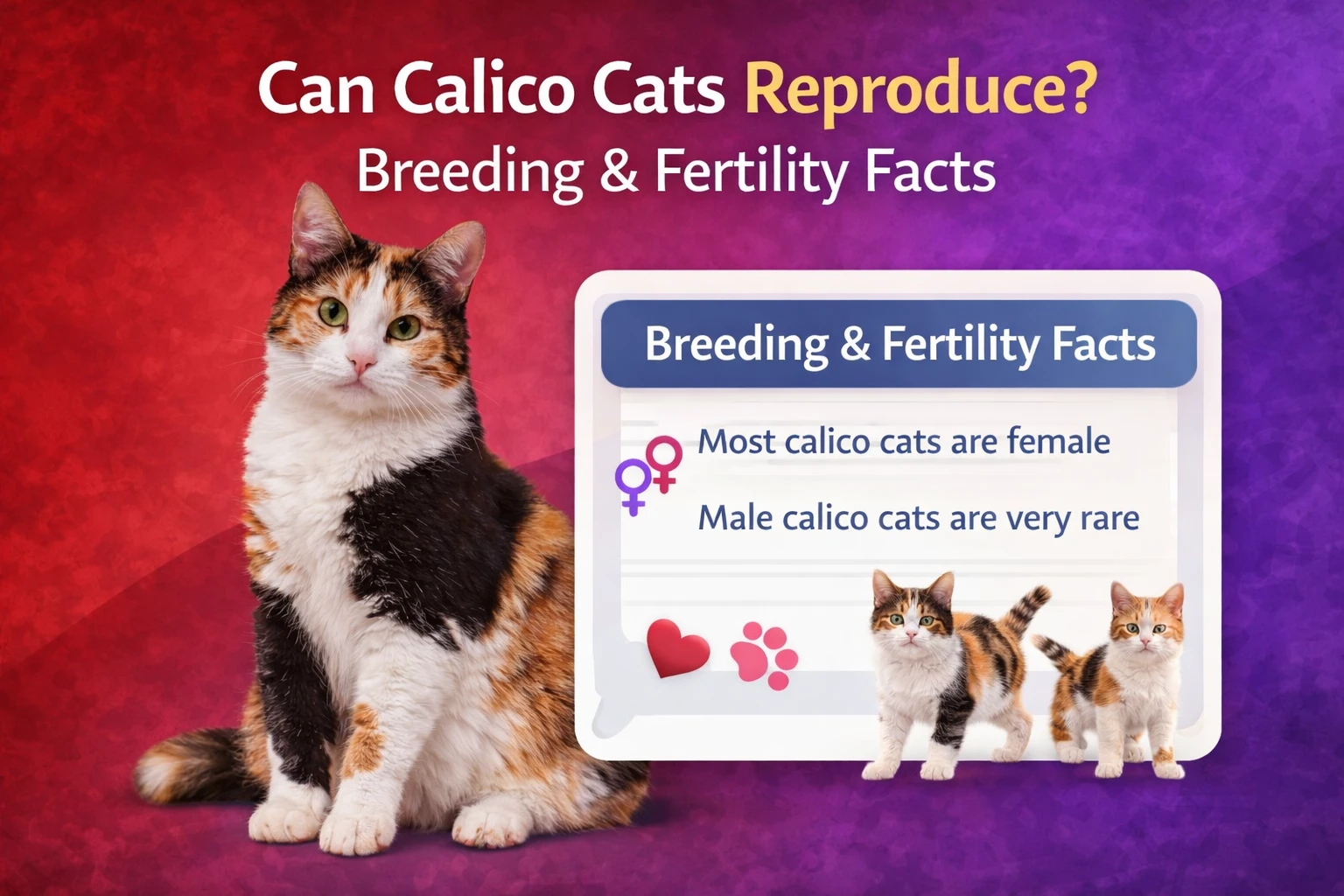
The tendency toward vocalization in calicos likely relates to their predominantly female genetics. Since 99.97% of calico cats are female, and female cats generally vocalize more than neutered males, what we perceive as “calico talkativeness” may actually be typical female cat communication. Female cats use vocalization to establish territory, communicate with humans, express needs and preferences, and maintain social bonds.
However, not all calicos are extremely vocal. Some are quiet and reserved, while others fall somewhere in the middle. Breed background, individual personality, early socialization, and learned behavior all influence how much a particular calico cat talks. The stereotype holds true for many calicos, but plenty of exceptions exist.
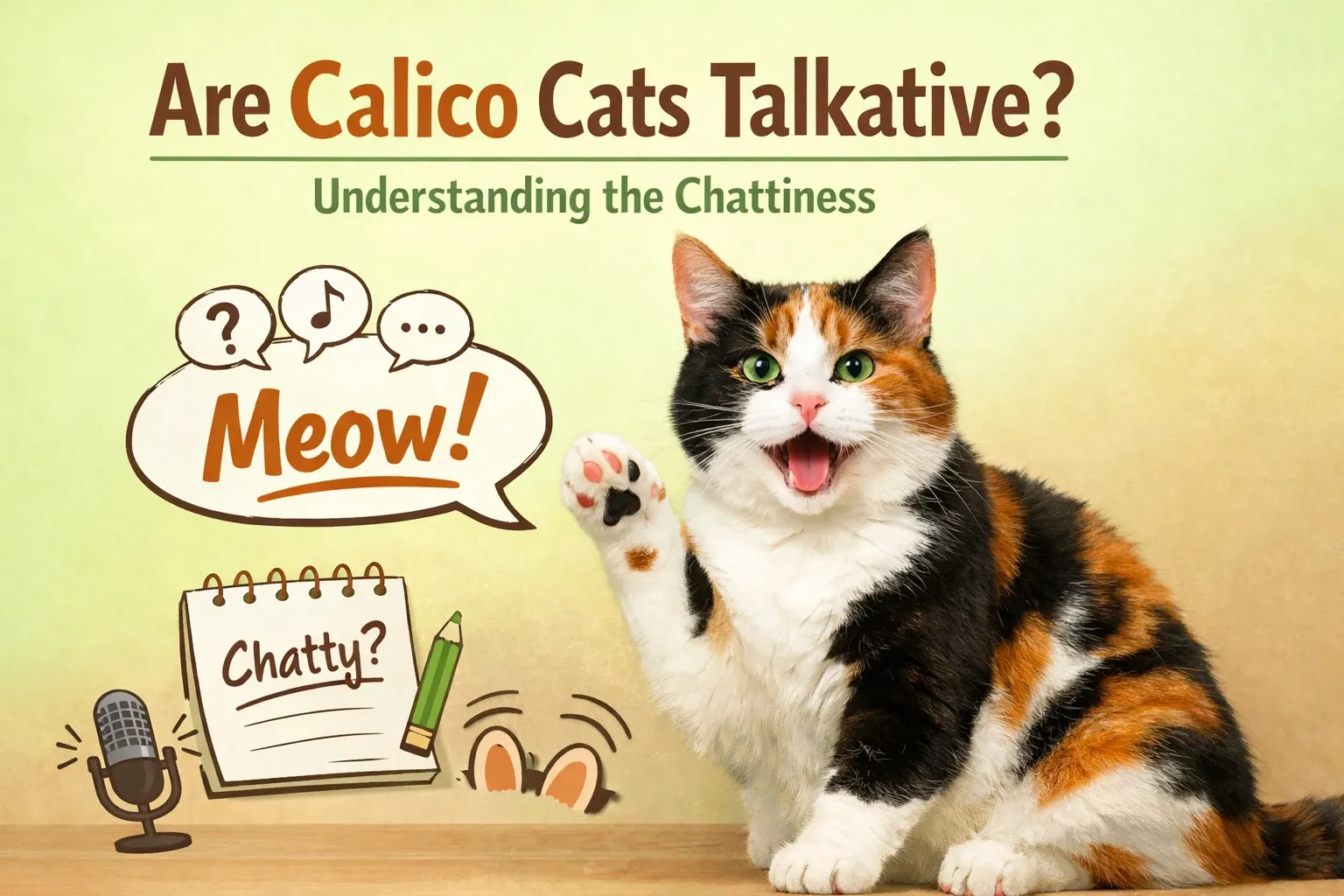
Are Calico Cats Talkative? Understanding the Chattiness
The Calico Communication Style
Yes, calico cats are frequently very talkative. Their vocal nature extends beyond simple meowing to include trills, chirps, yowls, and conversational-style vocalizations that seem designed to engage their human companions in dialogue.
Calico cats often act as commentators on household activities. They’ll vocalize when you’re preparing their food, comment on your phone conversations, express opinions about guests, announce their movements from room to room, and generally narrate their daily experiences. This running commentary can be charming or overwhelming, depending on your tolerance for feline chatter.
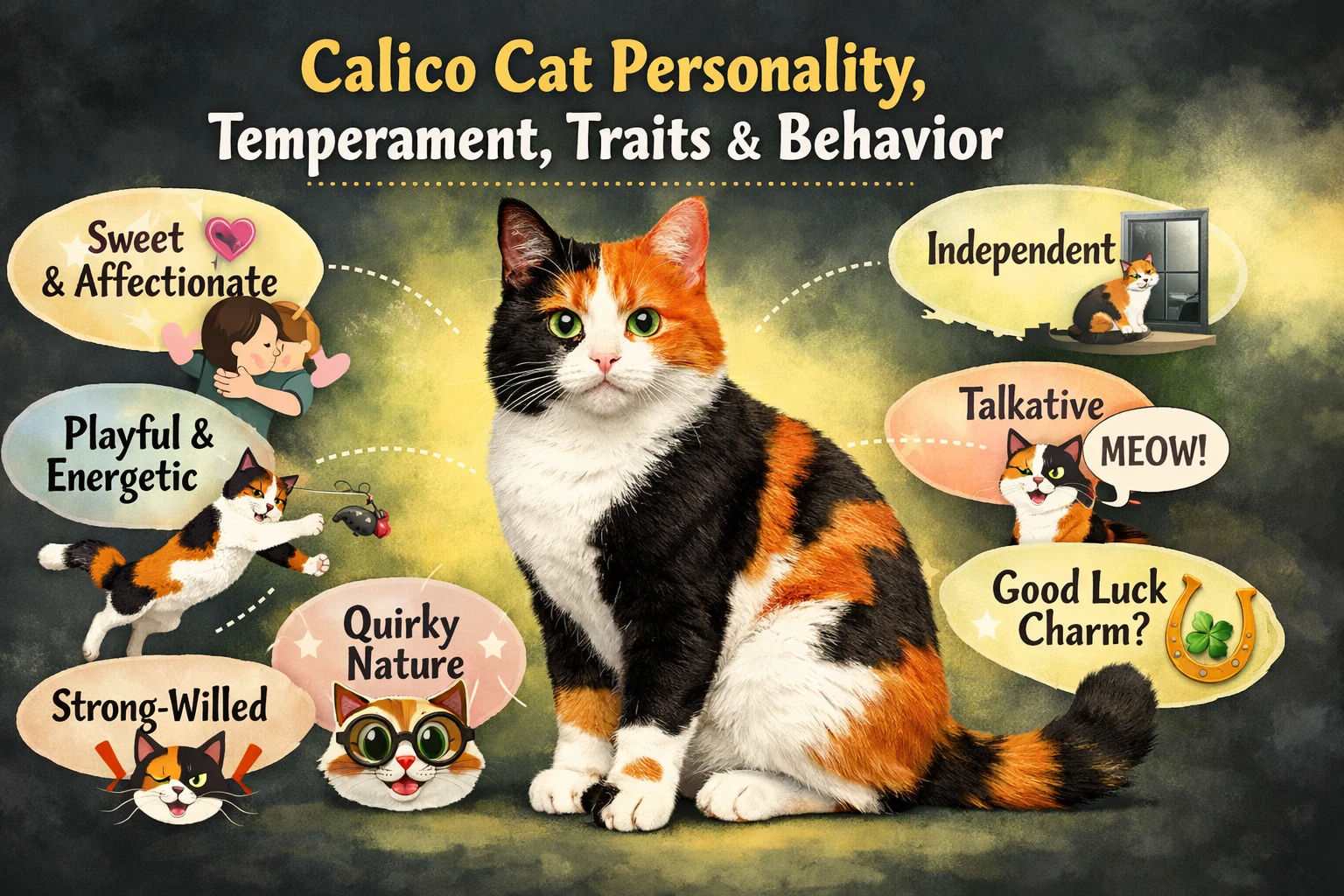
The talkative nature of calicos reflects their confident, assertive personalities. These cats aren’t shy about making their presence known and their preferences heard. They communicate directly and expect responses, creating interactive relationships with their humans based on verbal exchange.
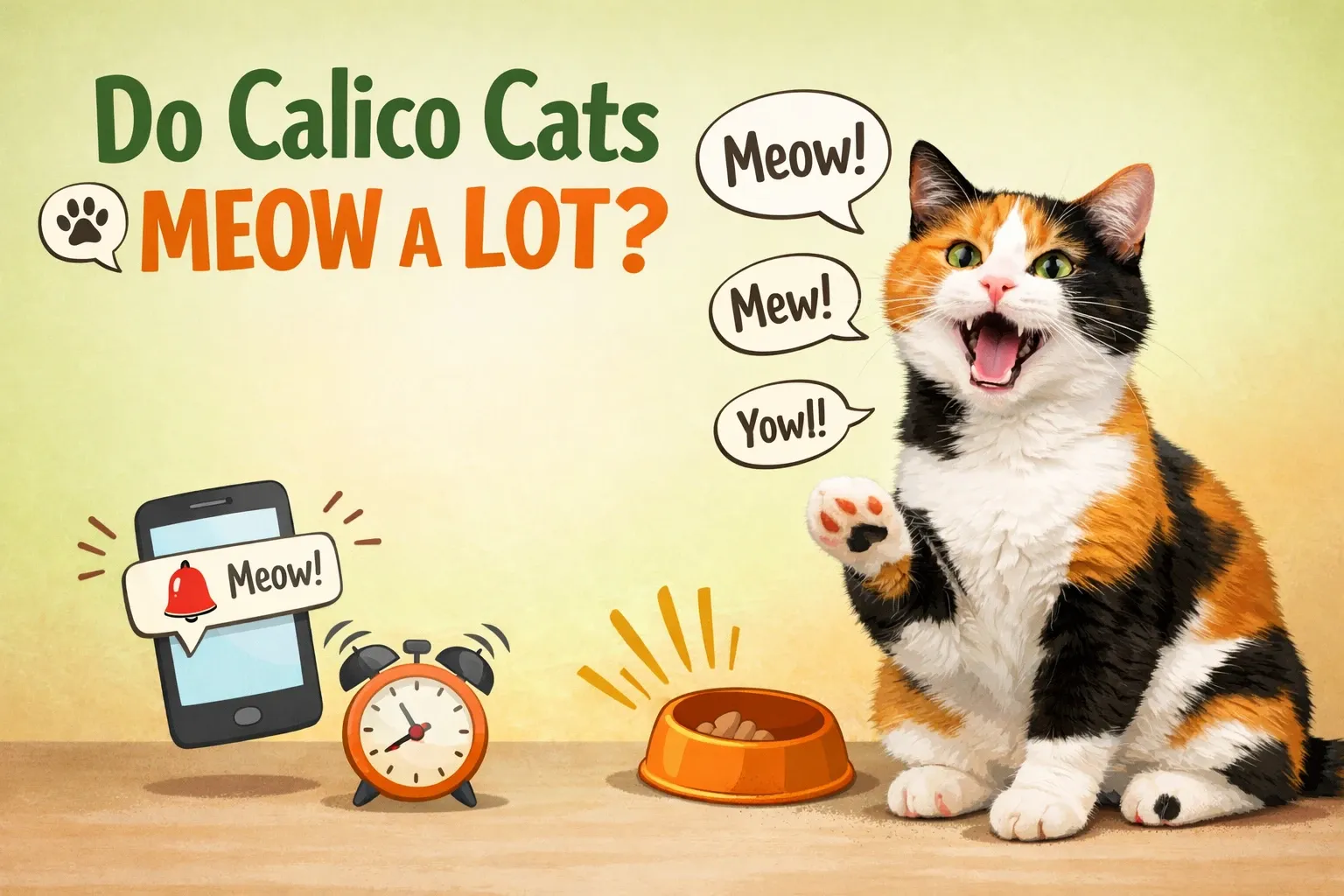
Do Calico Cats Meow a Lot?
Frequency of Calico Cat Meowing
Many calico cats do meow frequently throughout the day. The amount varies by individual, but talkative calicos may vocalize dozens of times daily in various contexts. This frequent meowing serves multiple communication purposes and isn’t necessarily problematic unless it becomes excessive or indicates distress.
Normal amounts of meowing for vocal calicos include greeting you when you arrive home, announcing meal times and requesting food, commenting on activities that interest them, seeking attention or interaction, expressing contentment through chirps and trills, and communicating before jumping up or down. These vocalizations represent healthy, normal communication between cat and human.
The frequency of meowing often increases during specific times. Meal times typically trigger increased vocalization as the cat requests food and expresses impatience. Early morning meowing is common as cats wake before their humans and want breakfast or attention. Evening hours may bring increased chattiness as cats become more active during crepuscular periods. During play sessions, many calicos vocalize excitement and engagement.
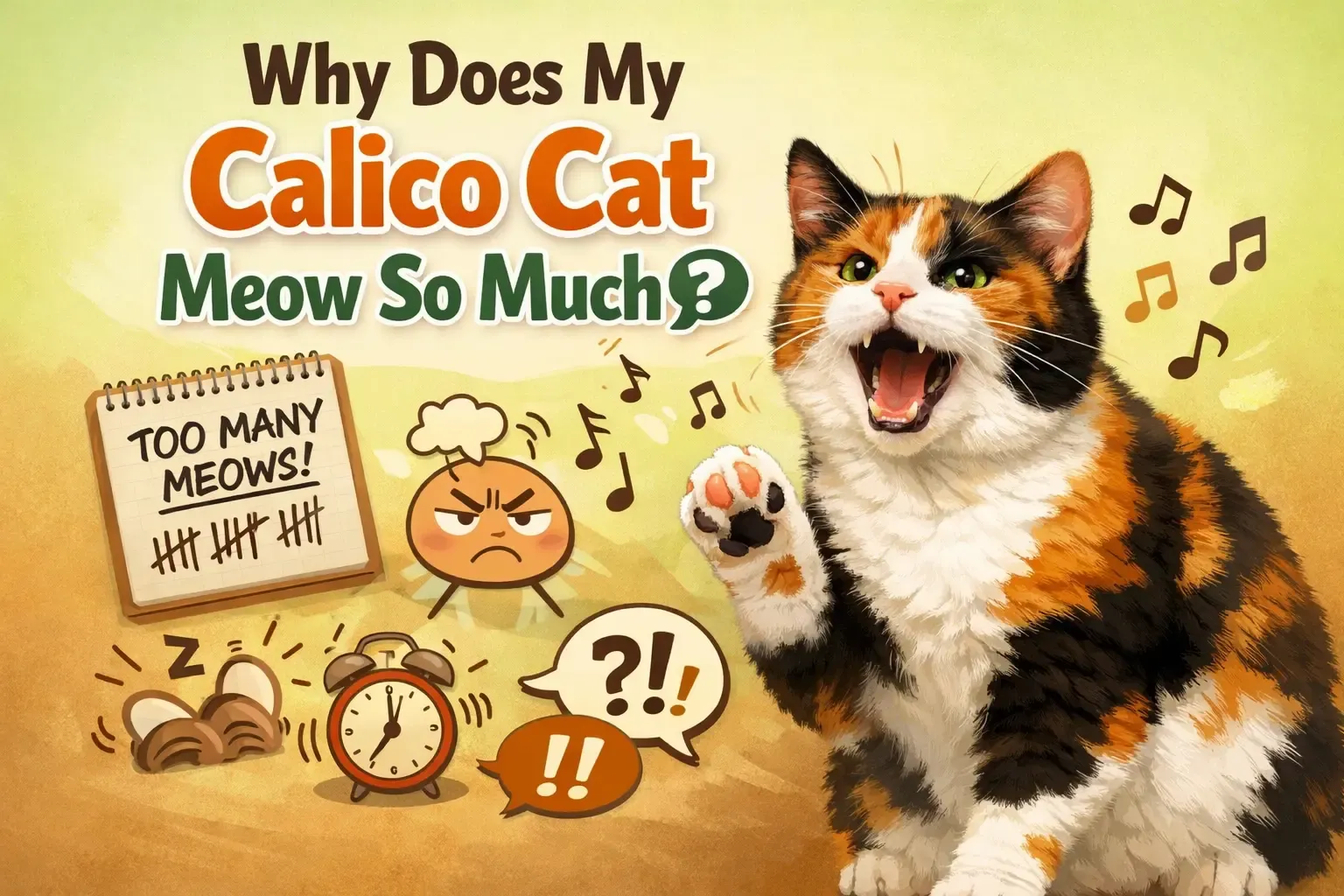
Why Does My Calico Cat Meow So Much?
Common Reasons for Excessive Vocalization
If your calico cat seems to meow constantly, several explanations might apply beyond just having a talkative personality.
Seeking Attention and Interaction
Calico cats bond strongly with their chosen people and often vocalize to maintain connection. Your cat may meow to get you to play with her, request petting or affection, express loneliness when you’re busy, seek reassurance of your presence, or simply want acknowledgment and interaction. This attention-seeking meowing is normal and reflects the cat’s social needs.
Hunger and Food Requests
Food-related meowing is extremely common in vocal calicos. Cats learn quickly that meowing brings food, so they may vocalize persistently at meal times, meow when they can see the bottom of their bowl, request treats or special foods, or express dissatisfaction with food offerings. Some calicos become quite demanding about food, meowing insistently until fed.
Medical Issues Causing Discomfort
Excessive meowing can indicate health problems that need attention. Pain from arthritis, dental issues, or injuries causes increased vocalization. Hyperthyroidism in older cats creates hyperactivity and excessive meowing. Cognitive dysfunction syndrome in senior cats causes confusion and nighttime vocalization. Urinary tract problems make cats vocalize when using the litter box. High blood pressure can cause disorientation and vocalization.
If your calico’s meowing suddenly increases dramatically or changes in tone or frequency, consult your veterinarian to rule out medical causes.
Stress and Anxiety
Environmental stressors trigger increased vocalization in many cats. Changes in household routine, new people or pets in the home, moving to a new residence, construction or renovation noise, and conflict with other household pets all create stress that manifests as excessive meowing.
Breed and Genetic Factors
Some breeds naturally vocalize more than others. If your calico has Siamese, Oriental, or Burmese ancestry, she may be genetically predisposed to chattiness. These breeds are famous for being extremely vocal, and their genes contribute to talkative personalities in mixed-breed calicos.
Learned Behavior
Many calicos learn that meowing gets results. If you consistently respond to meowing by providing food, attention, or access to desired areas, you reinforce the behavior. Your cat learns “meowing works” and continues using this effective communication strategy.
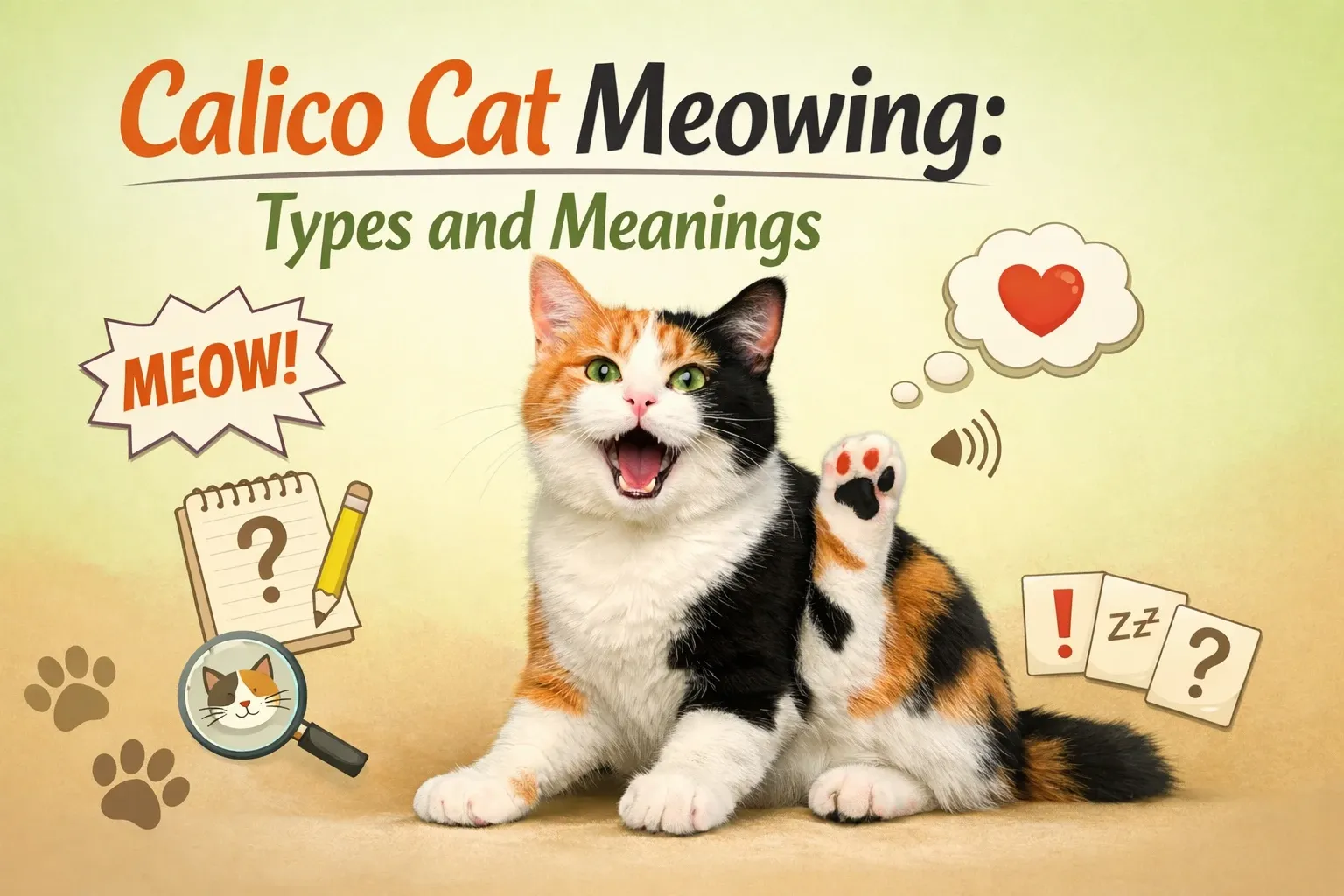
Calico Cat Meowing: Types and Meanings
Decoding Different Vocalizations
Calico cats use various types of meows and vocalizations, each serving different communication purposes. Understanding these sounds helps you respond appropriately to your cat’s needs.
Standard Meows
The basic meow is the most common vocalization. Short, mid-pitched meows typically serve as greetings or attention-getting sounds. Longer, drawn-out meows often indicate stronger desires or complaints. Repeated meows suggest insistence or urgency. The tone, pitch, and duration convey different meanings that attentive owners learn to distinguish.
Trills and Chirps
These short, rolling sounds typically express positive emotions. Mother cats use trills to communicate with kittens, and adult cats direct them at humans they trust. Trills often accompany greetings, serve as friendly acknowledgments, express contentment, or precede requests for attention. They’re generally happy, sociable sounds.
Yowls and Howls
These loud, prolonged vocalizations indicate strong emotions or distress. Yowling can signal pain or discomfort, occur during territorial disputes, happen when a cat is trapped or stuck, or indicate extreme stress or fear. In unspayed females, yowling is characteristic of heat cycles.
Chattering
The distinctive chattering or chittering sound occurs when cats watch prey they cannot reach, like birds outside windows. This excited vocalization reflects predatory frustration and hunting instincts. It’s normal behavior and nothing to worry about.
Purring
While not technically meowing, purring is important calico communication. Most purring indicates contentment and relaxation, but cats also purr when stressed or in pain as a self-soothing mechanism. Context helps determine what the purring means.
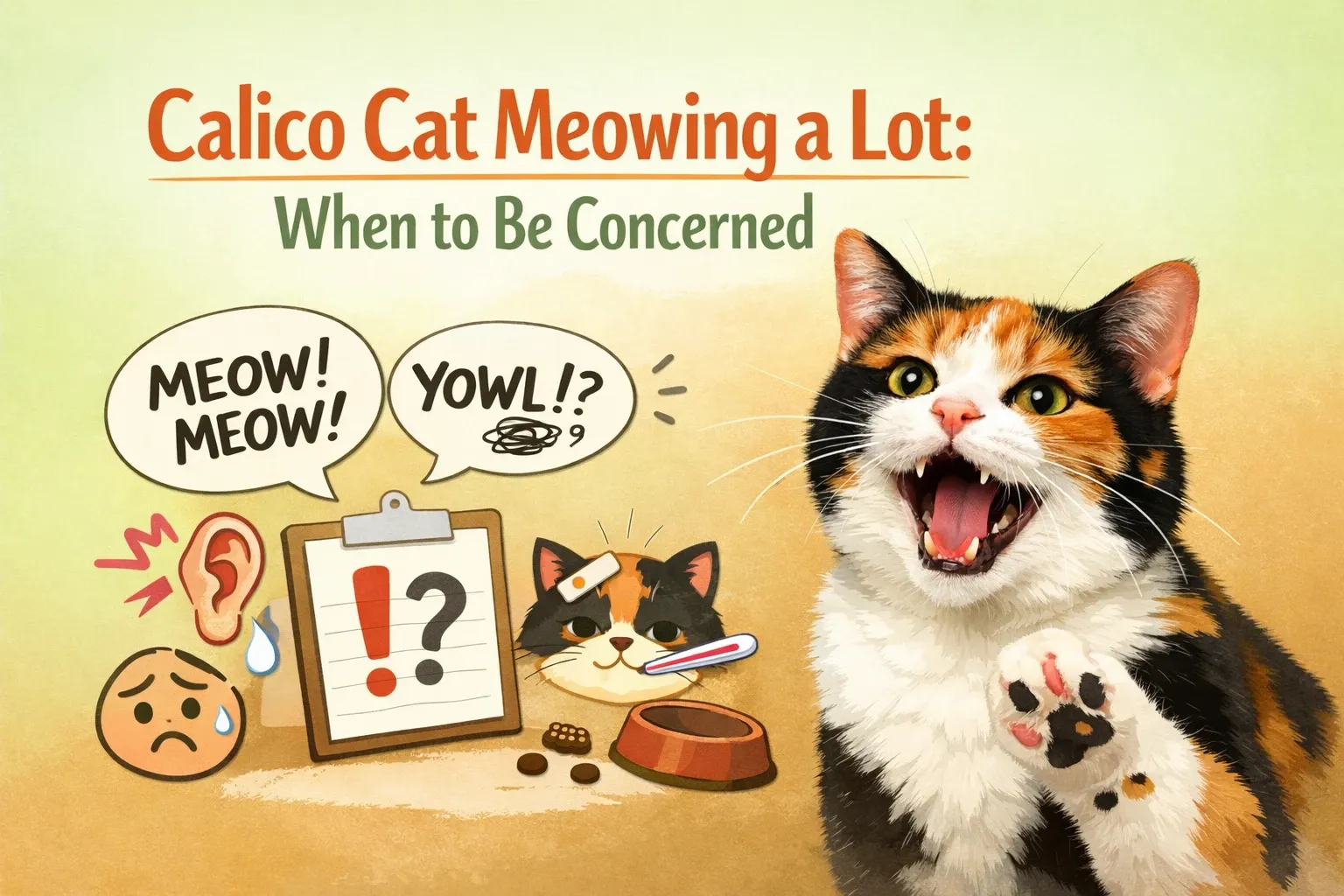
Calico Cat Meowing a Lot: When to Be Concerned
Distinguishing Normal from Excessive
While many calicos are naturally vocal, truly excessive meowing that disrupts daily life or indicates distress requires attention.
Warning Signs of Problematic Meowing
Sudden dramatic increase in vocalization without clear cause suggests medical issues. Meowing that seems pain-related, with body language suggesting discomfort, requires immediate veterinary attention. Nighttime vocalization that disrupts sleep, especially in senior cats, may indicate cognitive dysfunction. Meowing accompanied by other behavioral changes like appetite loss, lethargy, or hiding signals potential health problems.
If your calico’s vocalization pattern changes significantly or seems distress-based rather than communicative, consult your veterinarian promptly. Many medical conditions present with increased vocalization as an early symptom.
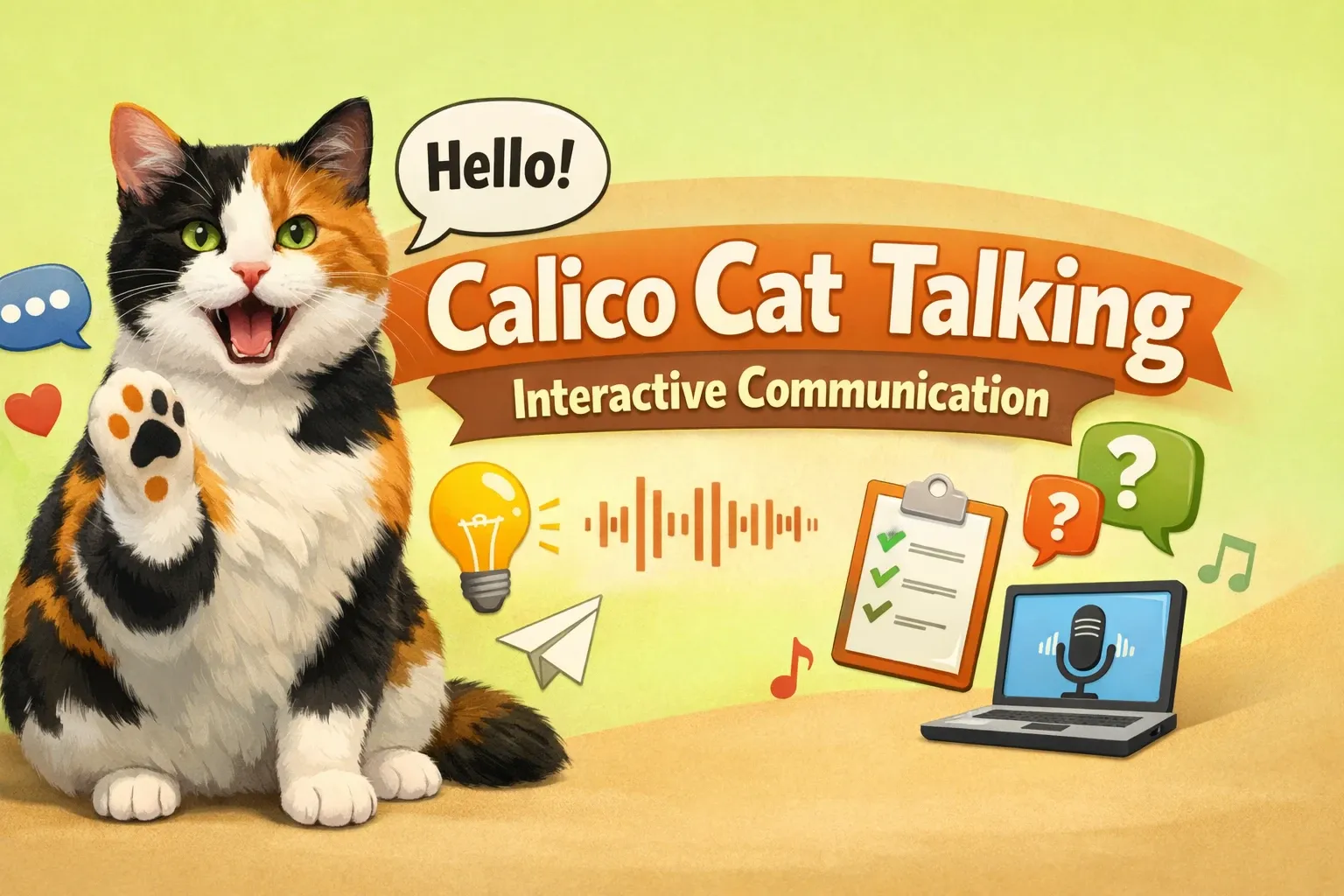
Calico Cat Talking: Interactive Communication
Conversational Calicos
Many calico cats are known for their “talking” behavior, responding to human speech with meows, chirps, or trills. While they don’t understand human language, they associate sounds with meanings and engage in back-and-forth communication. This strengthens the human-cat bond and provides mental stimulation. Some calicos even develop unique vocalizations for specific needs, like meowing for food or play, which attentive owners can learn to recognize.
Conversational calicos respond to human speech with meows, chirps, or trills. They seem to answer questions, comment on statements, and engage in verbal exchanges. While cats don’t understand human language in the way we comprehend it, they do learn to associate sounds with meanings and respond appropriately.
This interactive communication style strengthens the human-cat bond. Talking with your calico, even if she doesn’t understand the words, provides social interaction and mental stimulation. Many calicos genuinely seem to enjoy these “conversations” and initiate them regularly.
Some calico cats develop distinctive “words” or sounds for specific needs. They might have one meow for “feed me,” another for “play with me,” and a third for “let me out.” Attentive owners learn to recognize these different vocalizations and respond appropriately, creating sophisticated communication systems.
Calico Cat Meowing to Get Outside
Managing Door Dashing and Outdoor Requests
Many calicos vocalize persistently when they want to go outside, especially if they’ve had outdoor access previously or can see outside through windows and doors.
Door-related meowing typically involves standing by doors, meowing insistently at entrances or exits, following you to doors when you leave, and vocalizing when doors are opened. This behavior reflects desire for outdoor exploration, hunting opportunities, territorial patrol, or simple curiosity about the outdoor environment.
Managing Outdoor Meowing
For indoor-only cats (recommended for safety and health), redirect outdoor interest with window perches offering outdoor viewing, consider catio construction for safe outdoor access, provide indoor hunting games and prey-like toys, use leash training for supervised outdoor time, and ensure adequate indoor stimulation to satisfy curiosity. Never give in to outdoor meowing by allowing unsupervised outdoor access, as this reinforces the demanding behavior and creates safety risks.
For indoor-outdoor cats, establish clear routines about when outdoor access is available, use consistent door access points, consider cat doors for independent access, and ensure the cat comes inside at night. Consistent schedules reduce persistent meowing for outdoor access.
Calico Cat Meowing Sound Effect: What It Sounds Like
Describing Calico Vocalizations
Calico cat meowing varies widely in tone, pitch, volume, and duration. Some calicos have sweet, high-pitched voices, while others sound more demanding or strident.
Common calico vocal characteristics include mid to high-pitched tones, clear, carrying voices that get your attention, variety in vocalization types from soft chirps to loud demands, expressive quality that conveys emotion, and distinctive individual sound patterns. Each calico develops her own unique voice and communication style.
Recording your calico’s vocalizations can help you track patterns and identify changes that might indicate problems. It also creates fun memories of your cat’s unique personality and communication style.
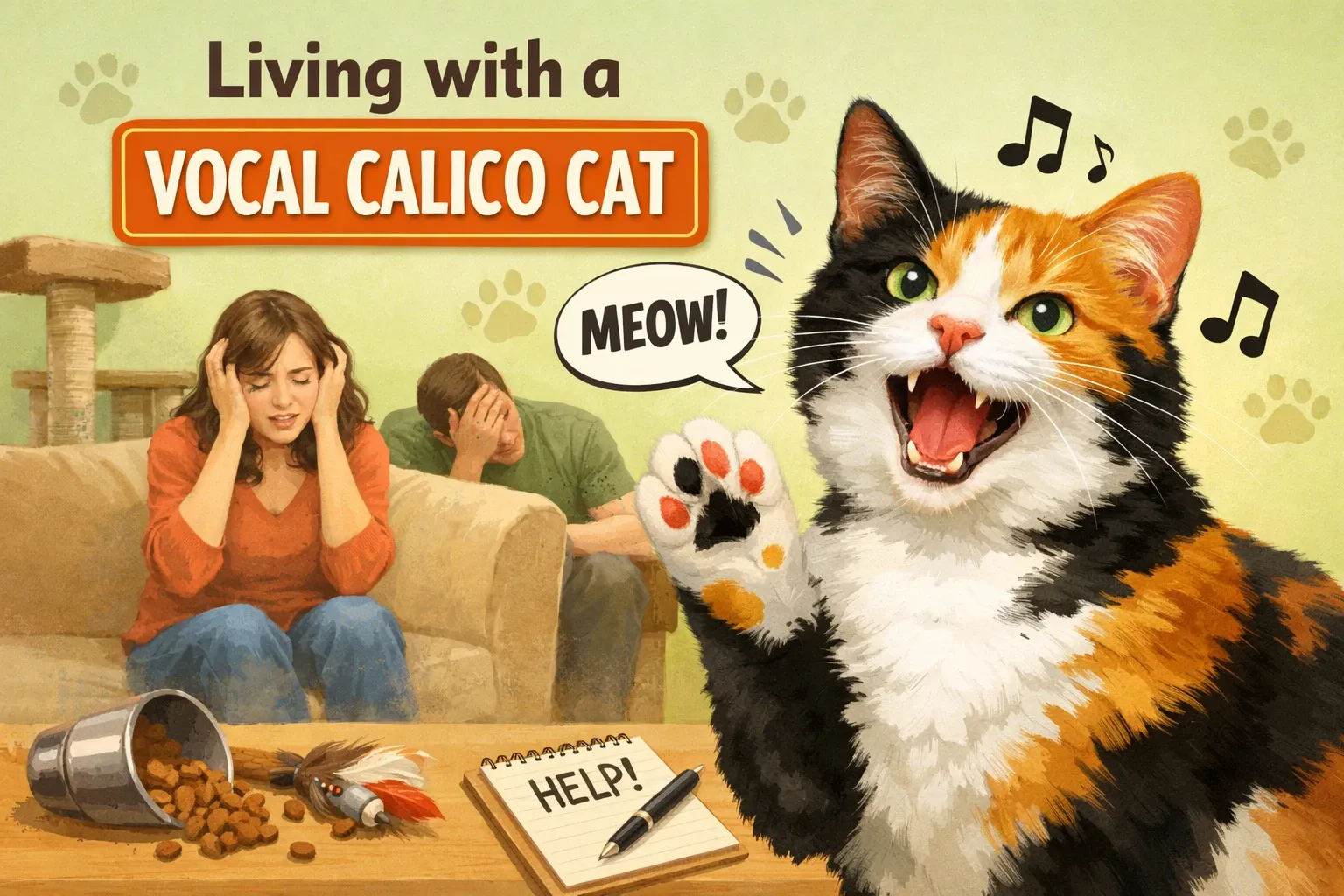
Living with a Vocal Calico Cat
Making It Work
A talkative calico enriches your home with personality and interaction, but managing excessive vocalization requires patience and strategy.
Embrace the Chattiness
Accept that vocalization is part of your calico’s personality. Talk back to your cat and engage in “conversations,” appreciate the interactive communication style, recognize vocalization as bonding and social interaction, and enjoy the unique personality your chatty cat brings. Fighting against a naturally vocal cat’s communication style creates frustration for both of you.
Set Boundaries
While embracing chattiness, also establish reasonable limits. Don’t reinforce excessive attention-seeking meowing by immediately responding, teach “quiet” commands with positive reinforcement, manage nighttime meowing through routine and enrichment, and address problematic vocalization patterns before they become entrenched. Balance acceptance of personality with training for household harmony.
Provide Outlets
Give your vocal calico appropriate opportunities to communicate. Engage in regular interactive play sessions, offer puzzle feeders that challenge mentally, create daily routines that provide structure, and respond positively to appropriate communication. A cat with adequate outlets for energy and mental stimulation generally vocalizes more appropriately.
Know When to Seek Help
Consult professionals if meowing truly becomes unmanageable. Contact your veterinarian for sudden changes in vocalization patterns, excessive nighttime vocalization, meowing that seems distress-based, or vocalization accompanied by other concerning symptoms. Consider consulting a certified cat behaviorist for persistent behavioral vocalization problems, help establishing appropriate boundaries, or developing management strategies for excessive chattiness.
Conclusion
So, are calico cats vocal? Absolutely. Their meowing, talking, and expressive sounds are part of their charming personality. From affectionate greetings to curious demands, calico cats use their voices to build strong bonds with their humans.
By understanding why your calico cat meows and how to respond, you can enjoy a deeper, happier relationship with your colorful companion.