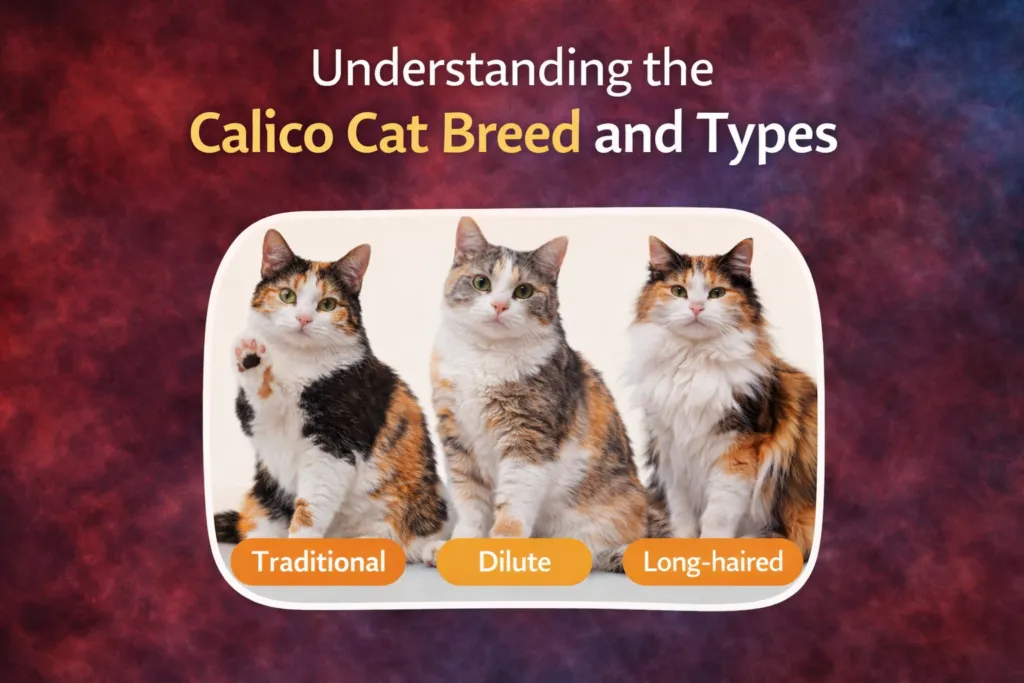
Hidden Secrets of Calico Cat History You Never Knew
Calico is a distinctive mix of colours and patterns. They differ from their tortoise cousins, but the clear white fur that makes up 25%–75% of their coat is speckled with orange and black.
This unique coat first emerged as a mutant gene but has become a prominent and recognized colour for many cat breeds. Behind this coat lies a rich history, biology and folklore. Exciting and unforgettable moments are etched in Calico’s history, making them even more unique.
Are Calico Cats Mean?
We found no research linking color to personality in cats, including those with calico coats. Therefore, there is no reason to expect your calico cat to be malnourished. Each cat has a unique personality, and some will be friendlier than others, but most are playful, curious, and loving.
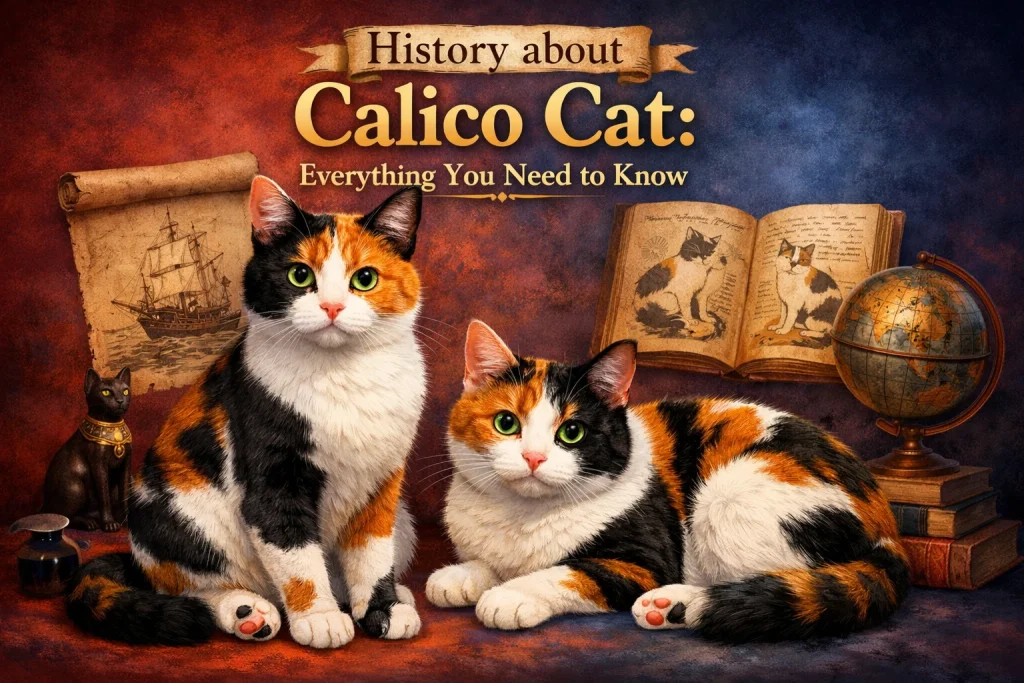
Where do Calico cats originate from?
Feline history is often a mystery, and the origins of the calico cat are no exception. Although no one knows for sure where the ancestors of your tri-coloured fur friend originally came from, it is often believed that they were first found in Egypt. From there, the animals would have sailed along the Mediterranean Sea to ports in Italy, Spain and France.
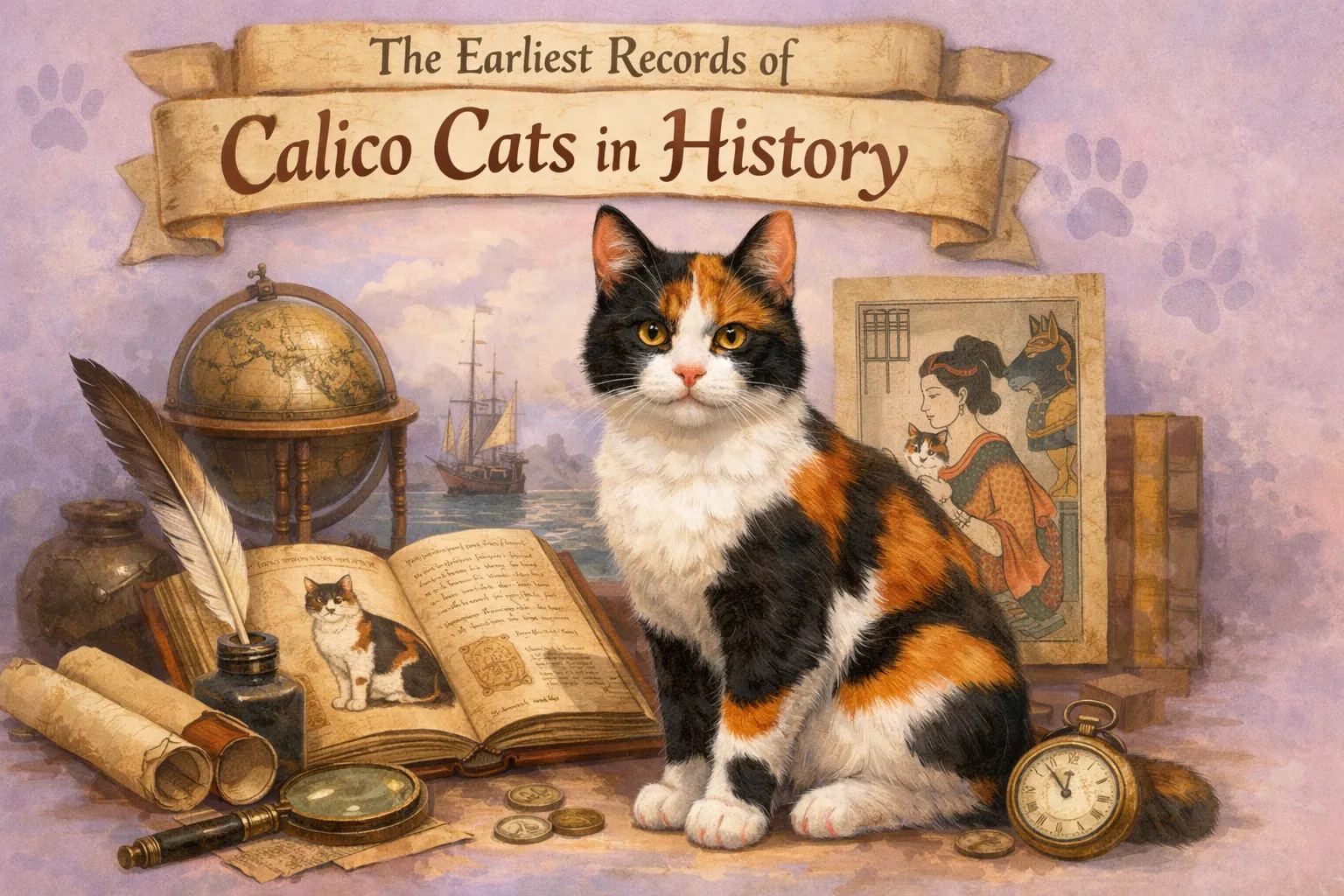
The Earliest Records of Calico Cats in History
Calico cats have a rich history! Across cultures and times, these unique cats are known for their tricolour coats of white, black and orange fur. Ancient Egyptians revered them as symbols of good luck and protection. In Japanese folklore, they were believed to possess magical powers and bring wealth.
Sailors relied on calico cats on board for protection. They believed that the colours of cat’s act as shields against danger. This made calicos reliable companions on sea voyages.
Biologically, calicos are unique. Most are female, due to the genetics that produce their coat patterns. Finding a male calico is rare, as an extra X chromosome is required. This rarity adds to their allure.
In 2012, a calico cat named Pidge made headlines. He saved his master from the house fire by waking him up. Pudge’s uniqueness and personality won the hearts of thousands of people.
The history of calico cats is a mixture of cultural symbolism and genetic uniqueness. From being seen as good luck charms to protecting ships, these colourful cats continue to captivate with their beauty and mystery.
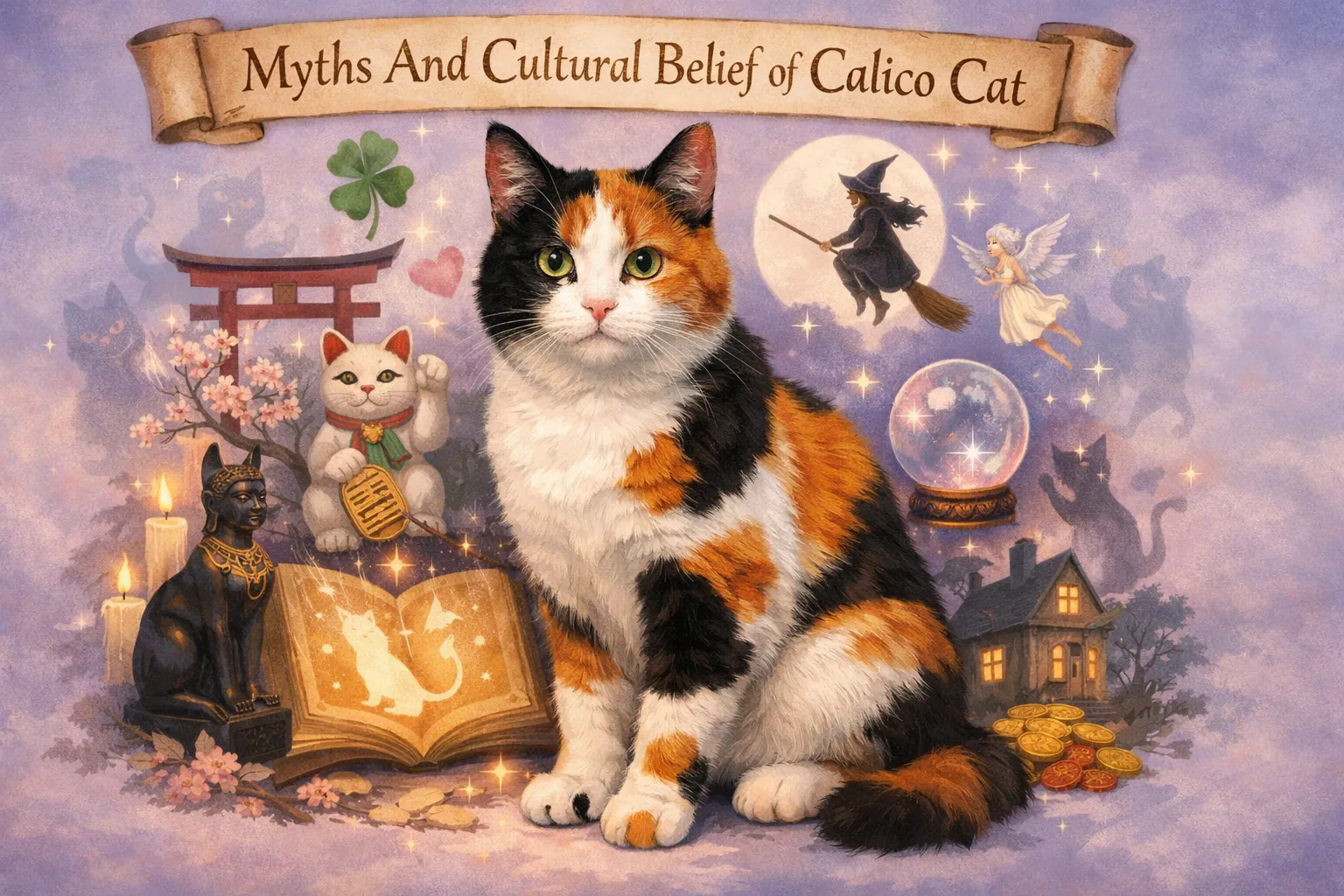
Myths And Cultural belief of Calico cat
Calico cats have fascinated humans for centuries with their beautiful, unique fur. Let’s explore some of the myths and beliefs surrounding them!
Good Luck: Many cultures believe that having a calico cat brings good luck. They are seen as charms of prosperity.
Ship’s Guardian: Sailors believed that keeping a calico cat on their ship would protect it from storms and evil spirits.
Symbol of Wealth: In some cultures, owning a calico cat was a sign of luxury and abundance.
Harbingers of Love: Dreams of calico cats indicate an upcoming romance or deep relationship.
Mystical Powers: Japanese folklore believes that calico cats have supernatural powers and can ward off bad luck.
But what makes calico cats even more special is their genetic makeup. Take for example, Luna – the calico cat who mysteriously appeared on the doorstep of an old widow. She brought comfort and companionship to Mrs. Anderson, pointing to a greater purpose. This story is a reminder of the amazing ways calico cats touch our lives.
Genetic
Genetically, they are all tortoiseshell. However, they also express the white spot gene. Additionally, there is an anomaly that the larger the white area, the smaller and larger the ginger or tabby patch.
In the 1940s, researchers began studying calico cats in earnest. Murray-Barr and his graduate student, Bertram, observed dark drumstick-shaped masses in the nuclei of nerve cells. They observed this mass in female cats, but not in male cats. These drumstick-shaped black masses became commonly known as bar bodies.
Susumu Ohno, a Japanese cell biologist, examined bar corpses in 1959 and determined that they were X chromosomes. Later in 1961, Mary Levin introduced the concept of X-inactivation. This is a concept in which one of the two X chromosomes within the female mammal is blocked. Mary observed this feature in coat color patterns in mice.
Female placental mammals have two X chromosomes, while male placental mammals have one X chromosome and one Y chromosome. The gene for orange/non-orange color is located on the X chromosome.
Because males have XY sex chromosomes and the Y chromosome is not linked to any locus of the orange gene. Therefore, males cannot have both orange and non-orange genes at the same time. This is what causes calico coloring or tortoiseshell, and for this reason, most calico cats are female. Male calico cats are very rare and only occur as a result of genetic anomalies.
One exception is that some faulty cell divisions may leave an extra X chromosome in the gametes that produce a male cat. This condition is called Klinefelter syndrome or XXY. This particular combination of chromosomes results in calico coloring in male cats.
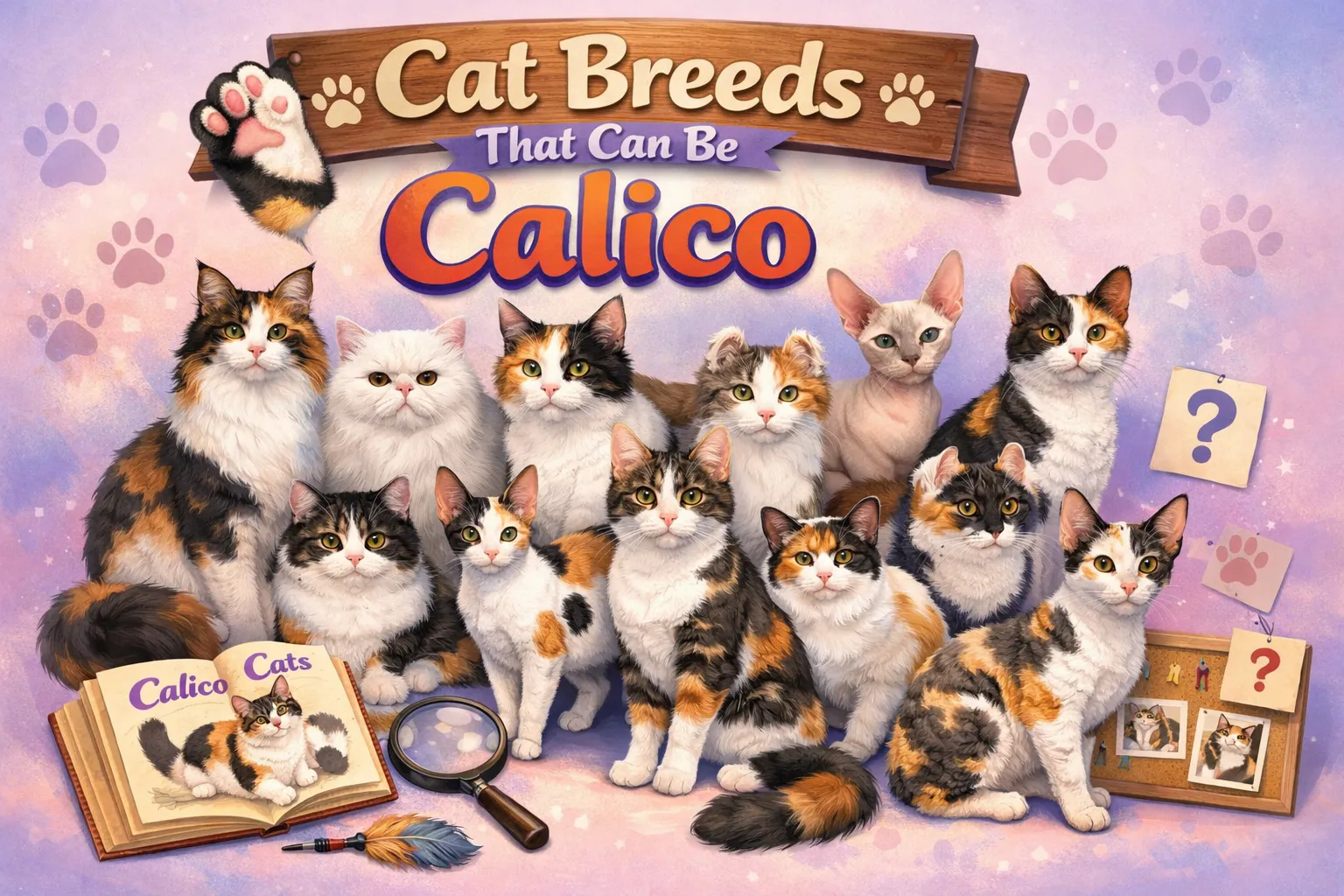
Cat Breeds That Can Be Calico
As we’ve established, the calico is an artifact and not an entirely new species. So that means any cat can be a calico! With so many popular breeds to breed this tricolor beauty, here are some of your potential candidates:
Are calico cats female?
It is a fact that almost all calico cats are female due to the unique chromosomal makeup that determines the colour variations in their coats.
1940
Some of the first official studies of calico genetics found abnormalities in their nerve cells compared to standard-coloured domestic cats. Female calicos had large masses within the nuclei of nerve cells that resembled drumsticks. They were named “bar bodies” after the scientist who first discovered them with his team of students.
1950
Japanese biologists studied Barr Bodies and concluded that they were actually X chromosomes that were tightly bound and unable to be used by the cell. Males have only one X chromosome in each cell, and one Y. Females have two X chromosomes.
1960
This information was used to develop the concept of “X-inactivation,” when one of a female’s two X chromosomes is turned off. In the case of calico cats, this X-inactivation is the cause of the calico coloration.
Because males have only one X chromosome, they do not have the gene sequence to express pigmentation. However, male calicos can occur as a rare genetic abnormality.
Males can have an extra X chromosome due to developmental defects in cats. This is called Klinefelter syndrome or XXY syndrome and causes male infertility. Therefore, male calicos are exceptionally rare and completely sterile.
Evolution of Calico Cats into Modern Times
As the world progressed, so did calico cats. By the late 19th century, the history of the calico cat became more documented, as breeding and genetic studies began to emerge. Today, the calico cat pattern is widely recognized and celebrated, with millions of cat lovers loving these cats for their beauty and unique traits.
Conclusion
Calico cats have always had an endearing charm. From being considered symbols of good luck and protection to inspiring legends and art, they have captivated cultures around the world. Their unique fur pattern of white, black, and orange has sparked curiosity and mystery.
Different cultures attribute different meanings to calicos. In Japan, they are seen as bringing good luck and wealth. They are also sometimes depicted as magical creatures or companions of samurai. In America, they were taught to protect ships at sea. Sailors believed that calicos had supernatural powers that could ward off bad luck during perilous voyages. This remarkable rarity only strengthens their mysterious beauty.