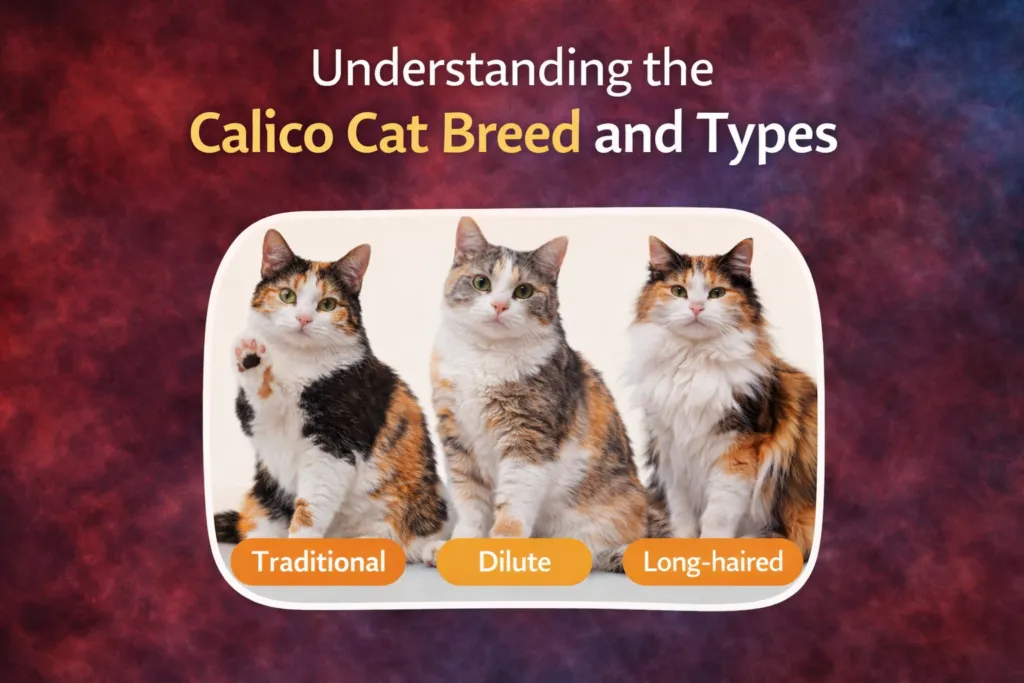
Best Exercise Plan for a Calico Cat: Keep Fit and Happy
Raising a calico cat is a unique experience. With their stunning orange, black, and white coats and their famous “tortitude” (a feisty, sassy, and independent personality), these cats make great companions. However, since “calico” refers to a color pattern rather than a specific breed, their energy levels can vary significantly based on their genetic background. Whether your calico is a laid-back Persian or an energetic American Shorthair, one thing all calicos share is the need for regular exercise to maintain their health.
In this guide, we’ll outline a comprehensive exercise plan tailored to the unique personality of the calico cat. We’ll cover why exercise is essential, how to establish a routine based on your cat’s age and breed, and how to overcome the common challenges of keeping an indoor cat active.
Why Exercise is Important for Calico Cats?
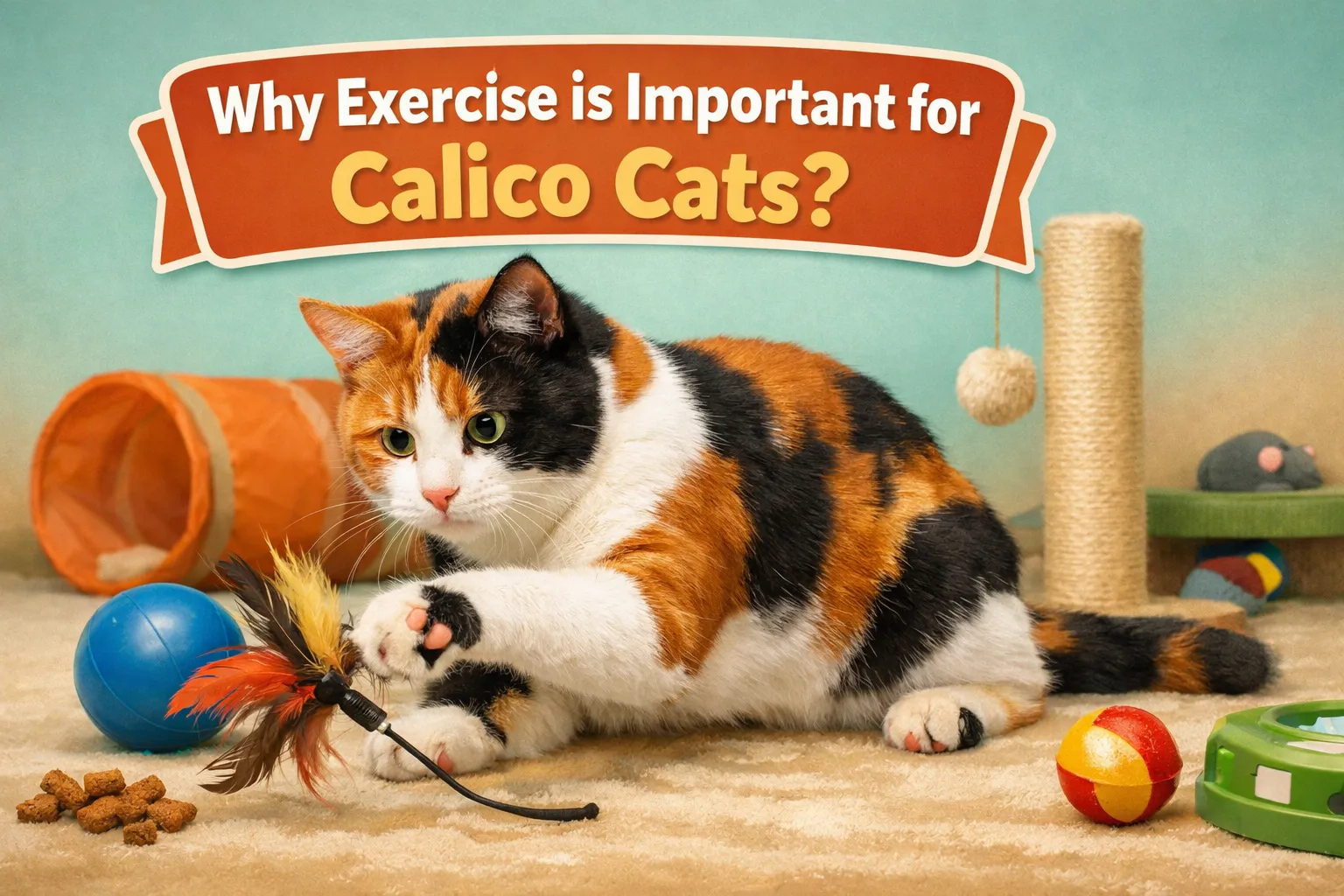
Many cat owners mistakenly believe that cats are naturally lazy animals that prefer to sleep all day. While it’s true that cats love sleep, a lack of physical activity can lead to serious health and behavioral issues. This is especially true for calico cats, many of whom are indoor pets. Without natural outlets for their energy, they can easily become overweight. Obesity in cats is a major health crisis that leads to diabetes, joint pain, and a shorter lifespan.
In addition to physical health, exercise is crucial for your calico’s mental health. Cats are natural hunters. In the wild, they spend hours stalking and catching prey. When we keep them indoors with filled food bowls, we take away this instinctual purpose. A bored calico cat often becomes destructive. If your cat is scratching furniture, attacking your ankles, or meowing excessively at night, it’s usually a sign they need more activity. A solid exercise plan mimics hunting, expends accumulated energy, and stimulates the brain, resulting in a calmer, happier cat.
Understanding Your Calico’s Energy Levels
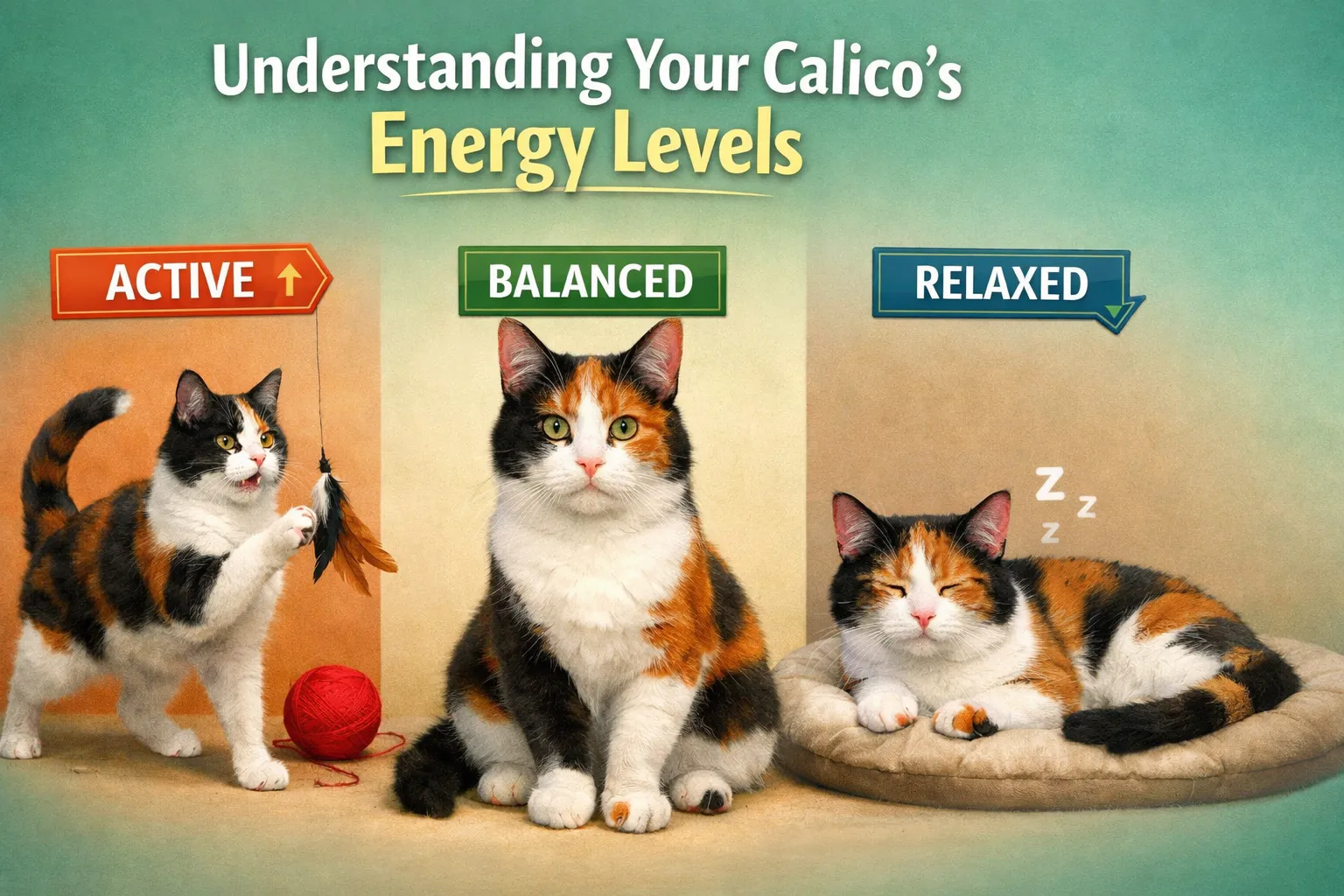
Before starting a specific exercise routine, it’s important to assess your cat individually. Since calico is a coat pattern found in many breeds, exercise needs can vary. If your calico has British Shorthair genes, they might be more laid-back and need extra encouragement to move. If they come from the Turkish Angora or Maine Coon family, they might be naturally more energetic and athletic.
You should also consider your cat’s age. A kitten will have bursts of energy (zoomies) and require frequent, short play sessions, while a senior calico will need gentle movement to keep joints fluid without causing pain. Understanding these factors helps you tailor the intensity and duration of exercise to suit your particular cat.
The Basic Strategy: “Hunt, Catch, Kill, Eat”
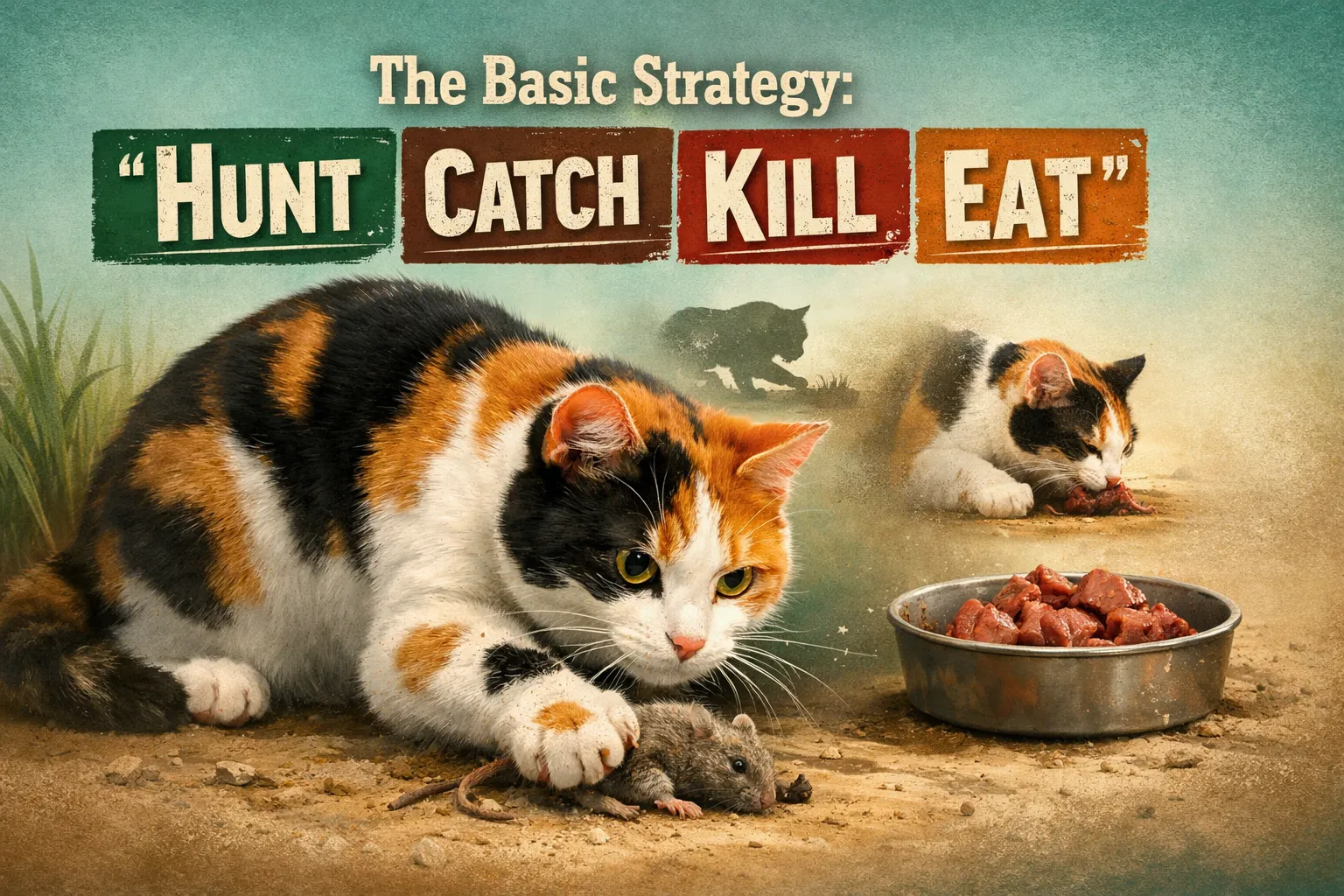
The most effective way to exercise your cat is by tapping into their natural instincts. Behavior experts often recommend a cycle called “Hunt, Catch, Kill, Eat,” which mimics a wild cat’s day and provides the most satisfaction.
To implement this, schedule your most intense exercise session just before meal time. Use a toy to simulate “hunting,” allowing your cat to chase it. Let them “catch” and “kill” the toy so they feel victorious. Immediately after the play session, feed them. This signals to their body that hunting is over and it’s time to eat and rest. This cycle not only burns calories but also aligns with their natural biological rhythm, often leading to deep and peaceful sleep afterward.
Activity 1: Interactive Wand Play (String Toy)
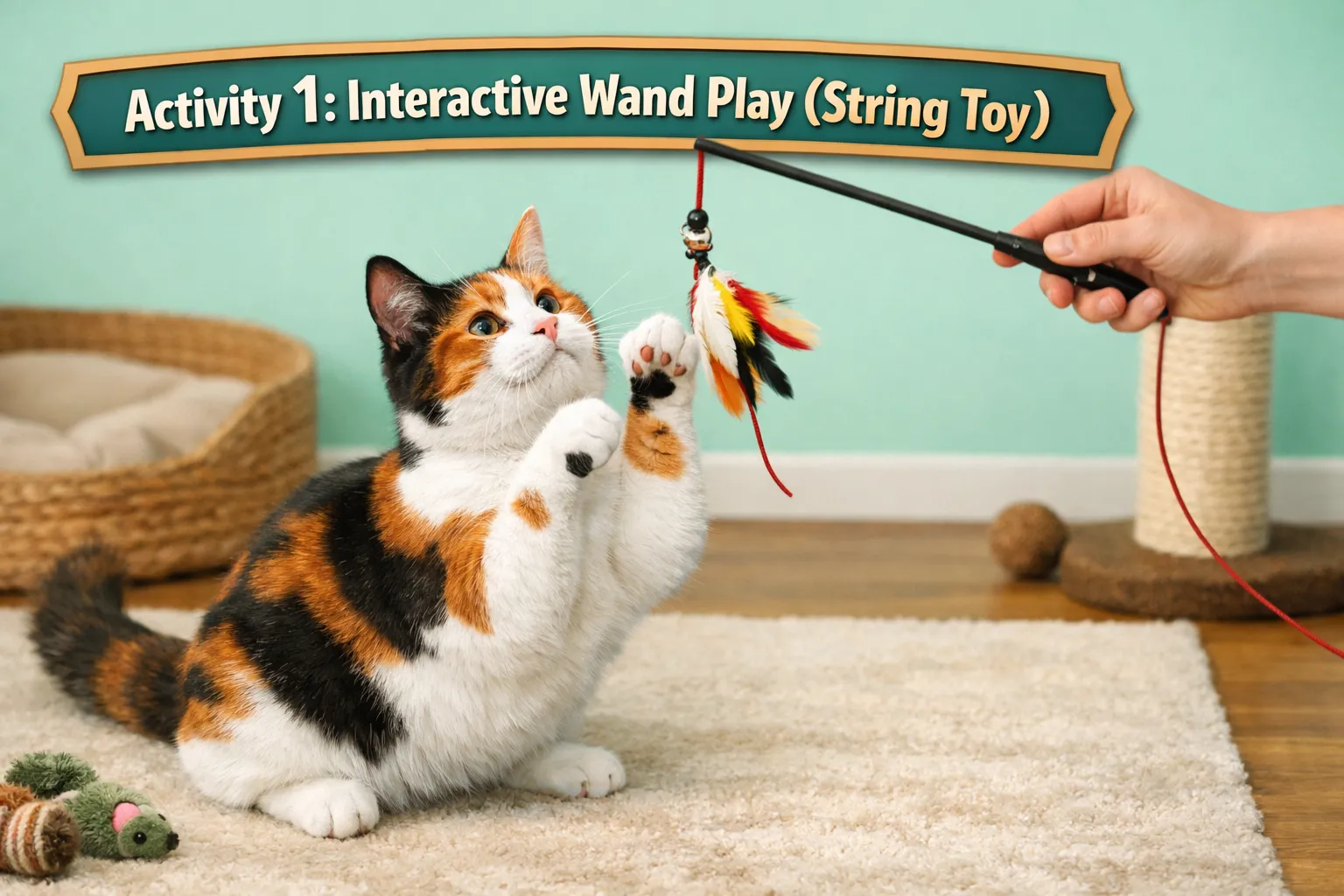
The best form of exercise for a cat is “interactive wand play.” It’s not just about dangling string in front of their face; it’s about simulating prey. To fully engage a clever calico, you need to move the toy like a scared mouse or flying bird. Take the toy away from the cat, hide it behind furniture, and make it move quickly across the floor.
For calicos with a lot of “tortitude,” if the game is too easy, they will quickly become bored. You need to challenge them. Let them stalk the toy from a distance. The mental focus required for stalking is just as exhausting as the physical running. Aim for two 15- to 20-minute sessions per day. This direct interaction also strengthens the bond between you and your pet.
Activity 2: Environmental Changes and Use of Heights
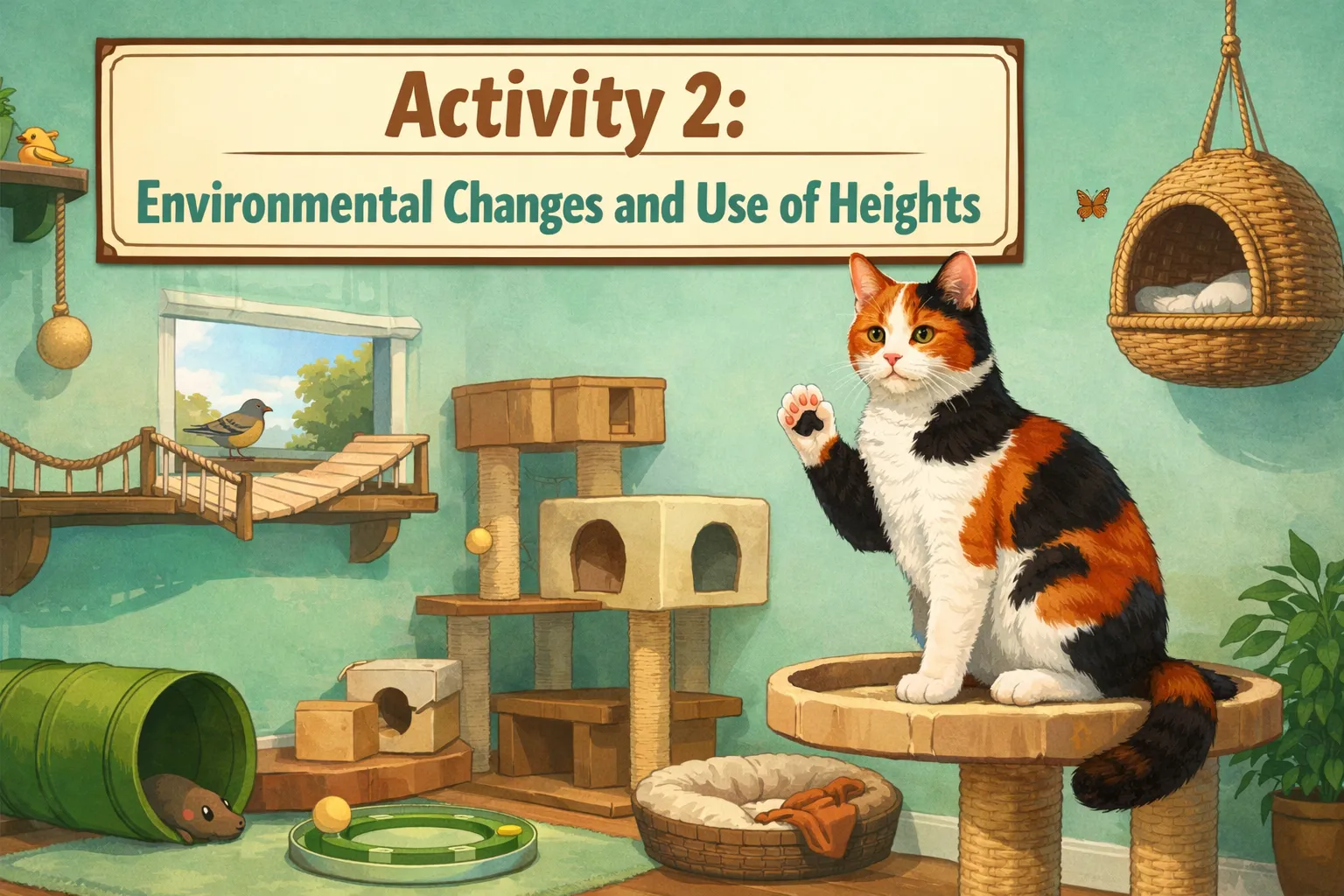
Exercise doesn’t always require your direct involvement. You can design your home to encourage passive (environmental) exercise throughout the day. Cats love vertical spaces. By setting up cat trees, wall shelves, or seating areas near windows, you encourage your calico to jump, climb, and balance.
Climbing is an excellent muscle-building activity that burns more calories than walking on flat surfaces. You can motivate them by placing treats or their favorite blanket on the highest level of the cat tree. This forces them to work for their reward. If you live in a multi-level home, consider placing their food bowl, water bowl, or litter box on a different floor, forcing them to use the stairs multiple times a day.
Activity 3: Food Puzzles and Scavenging
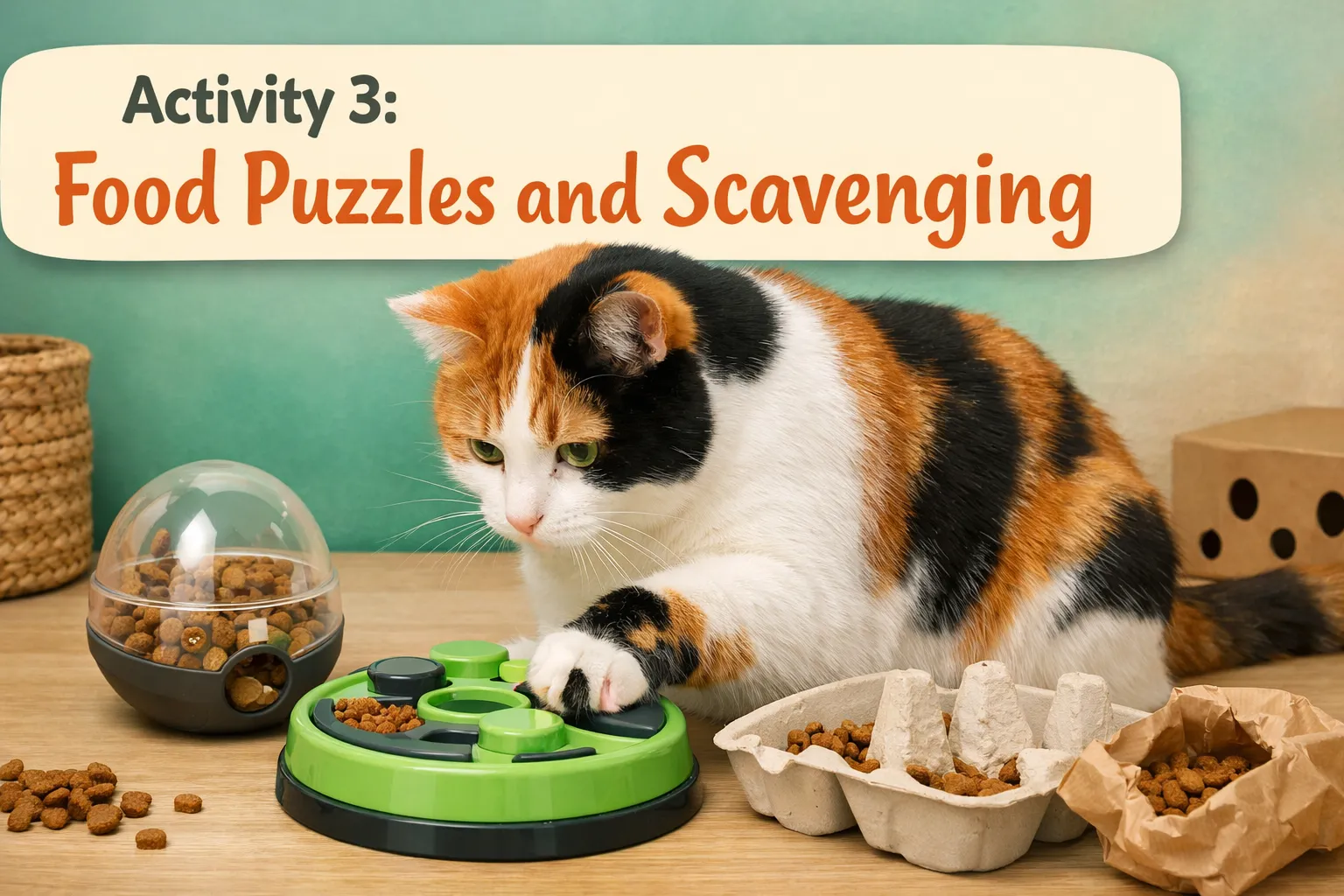
One of the biggest contributors to obesity in cats is “free feeding,” where the food bowl is left out all day. This encourages overeating due to boredom. A great way to incorporate exercise into mealtime is by using food puzzles or treat-dispensing balls.
These devices require the cat to bat, roll, or shake them to release the food. This turns mealtime into physical and mental exercise. For a calico who is very food-driven, you can hide small portions of their meals around the house. This “scavenger hunt” forces them to use their nose and move from room to room to find their dinner, mimicking the behaviors of their wild ancestors.
Activity 4: Solo Play and Self-Entertainment
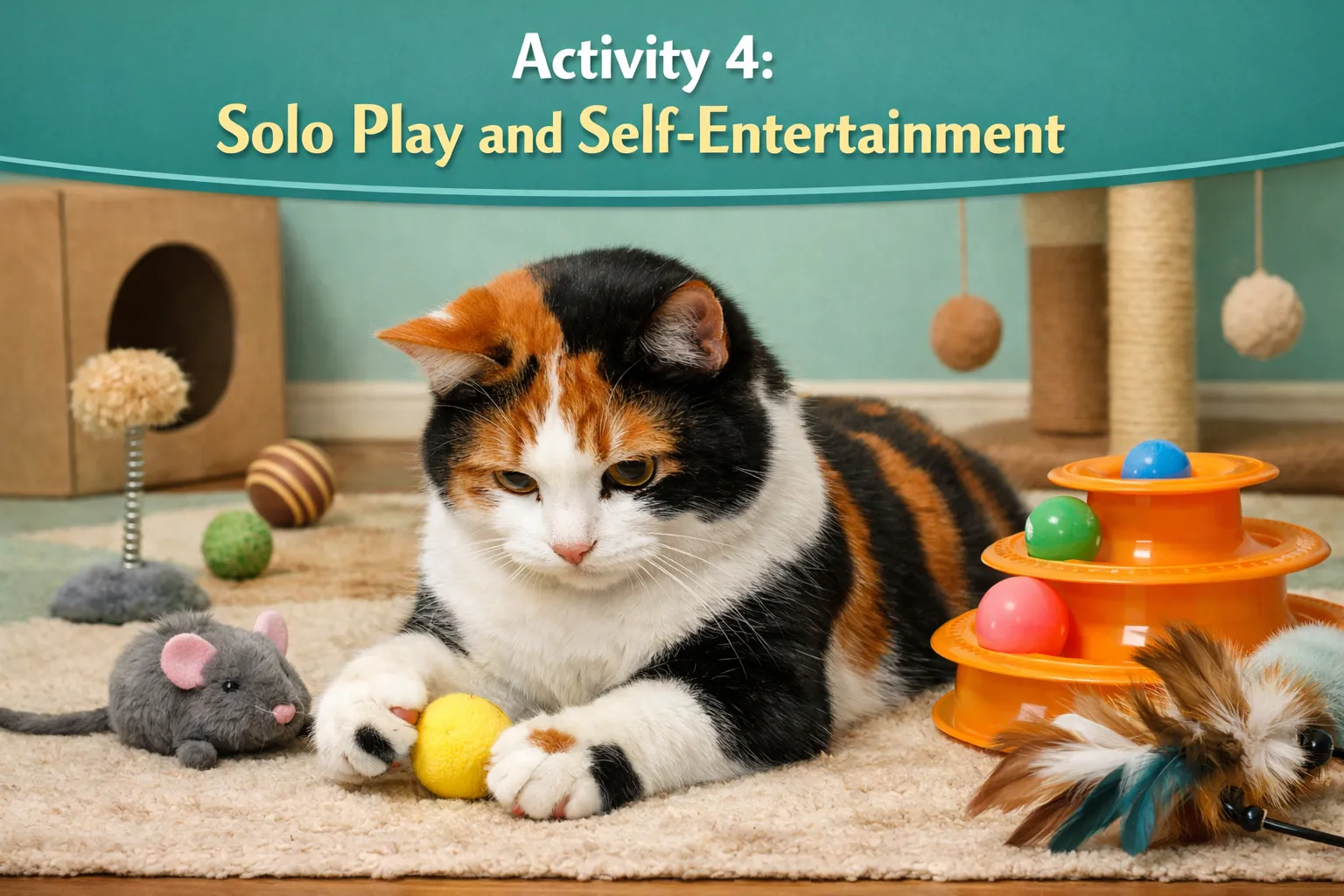
While playing with you is ideal, you can’t always be there to entertain your cat. To keep your calico active when you’re not home, provide toys that they can use independently. Springs, crinkle balls, and kicker toys are great options.
However, a pile of toys on the floor can quickly become boring. To keep the exercise routine fresh, try a technique called “toy rotation.” Store most of the toys in a closet and only bring out three or four at a time. Every few days, swap them with a different set. This makes the “new” toys seem interesting again and encourages your cat to investigate and play rather than ignore them.
The Challenge of Overweight Calicos
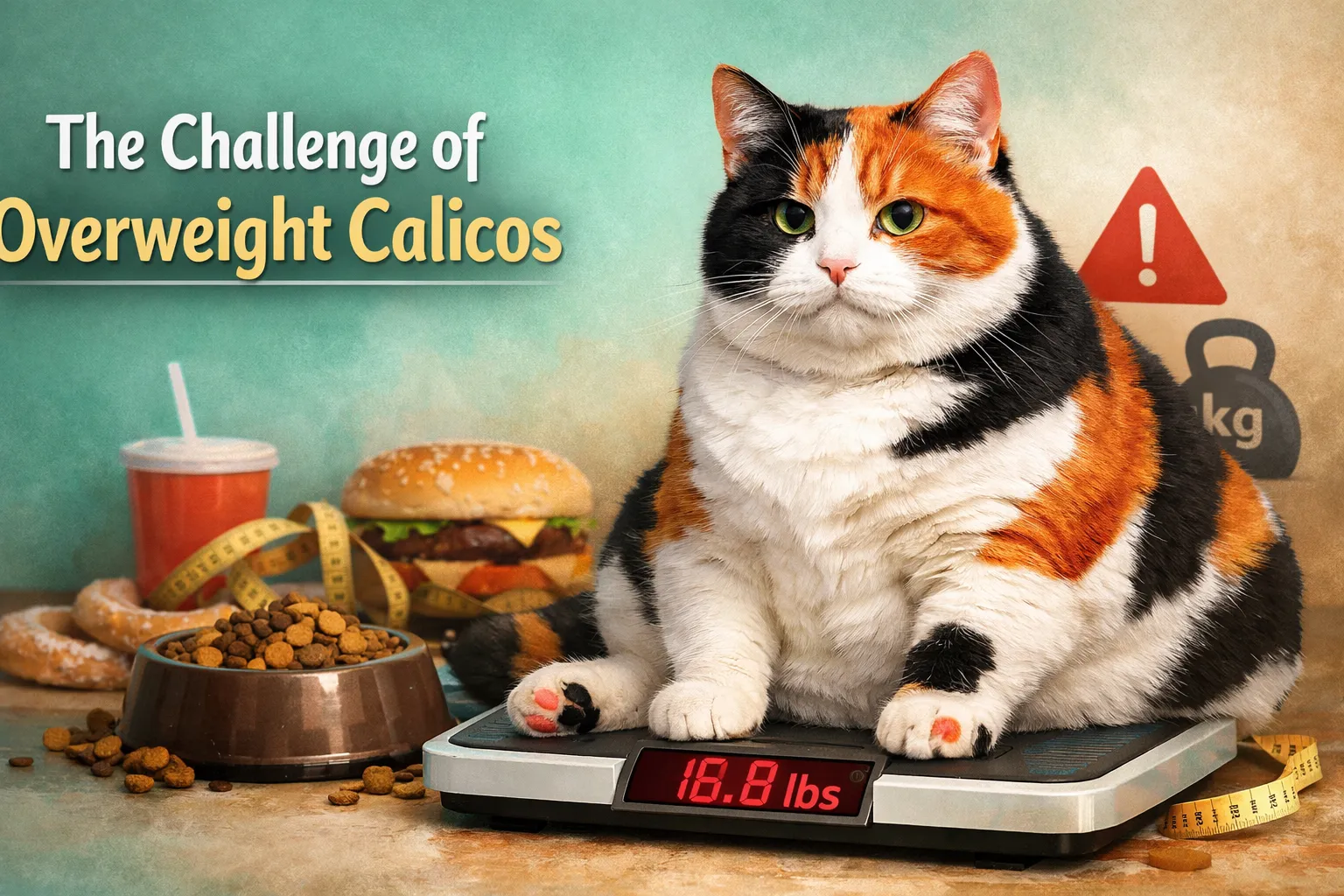
If your calico is already overweight, be cautious when starting an exercise plan. You can’t expect a heavy cat to run for 20 minutes or jump around vigorously; this could put too much strain on their joints and heart.
For overweight cats, start slowly. Begin with just two to five minutes of activity a few times a day. Lie on the floor with them and use a wand toy to encourage them to roll over, bat at the toy, or stand on their back legs. As their stamina improves, you can gradually increase the duration and intensity of the sessions. The key is consistency. Even a little movement every day makes a big difference over time and helps speed up their metabolism.
Exercise Plan for Senior Calico Cats
As your calico ages, they may develop arthritis or muscle weakness. Exercise is still essential for keeping joints limber and muscles strong, but the approach should be adjusted. Avoid encouraging high jumps to prevent injury.
Instead, focus on “floor exercises.” Drag a ribbon or feather along the ground so they can chase it without jumping. Focus on mental stimulation with slower-moving targets. Walking exercises are also beneficial; simply encourage your senior cat to follow you from one room to another with healthy treats, providing low-impact cardio.
Safety Precautions and Signs of Overexertion
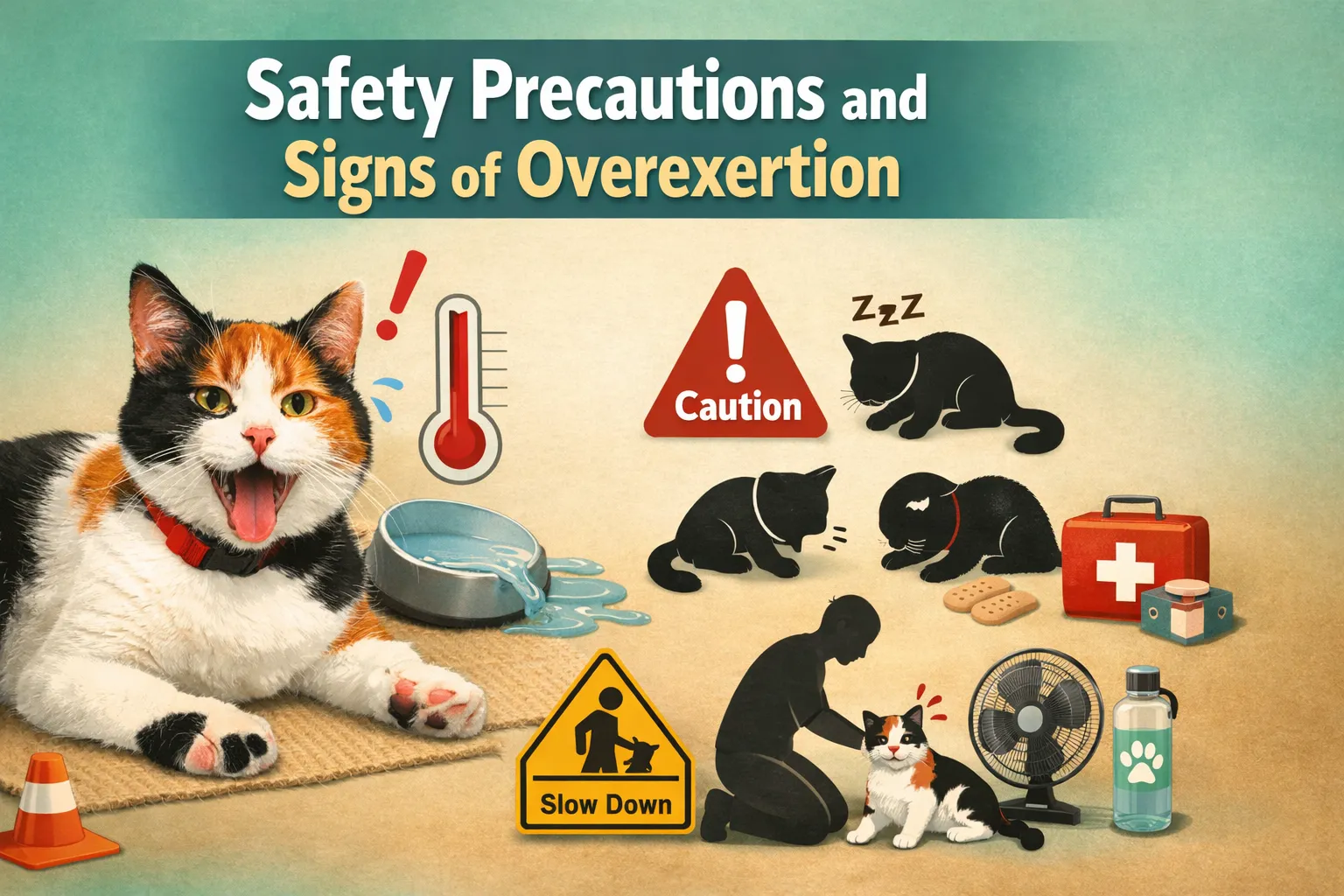
While encouraging your cat to stay active is great, it’s possible to overdo it. Cats are sprinters, not marathon runners. They are built for short bursts of energy followed by rest. Watch for signs of overexertion during play.
If your cat starts panting with an open mouth, this is a warning sign. Unlike dogs, cats rarely pant unless they’re experiencing extreme heat or stress. If this happens, stop the play session immediately and let them rest. Additionally, always ensure the environment is safe. Remove any loose threads, rubber bands, or small plastic pieces that could be swallowed during play.
Conclusion
Creating an exercise plan for your calico cat is not a one-time task; it’s a lifestyle change. The goal is to integrate movement into their daily routines so it becomes a habit. By combining fast-paced interactive play with environmental changes and food puzzles, you can ensure that your calico stays lean, sharp, and happy.
Remember, each calico is different. Some might respond immediately to a laser pointer, while others may prefer wrestling with a kicker toy. Be patient and experiment to discover what motivates your specific cat. With a little effort and creativity, you can help your beautiful three-colored companion lead a long, healthy, and active life.